Author: luke

  • Junkers Bauhaus 6060-2 Review

    Junkers Bauhaus 6060-2 Review

    Junkers Bauhaus 6060-2 Review

    Junkers 6060-2 Hugo JunkersHugo Junkers was a German engineer and aircraft designer who is widely credited with designing the first all-metal aircrafts. As founder of the Junkers Flugzeug- und Motorenwerke AG, he was one of the central figures in the German aircraft industry in the years between World War I and World War II. As an outspoken pacifist, Hugo Junkers was not interested in designing warplanes and instead focused his efforts on the development of multi-engine passenger and cargo planes, helping to establish airlines in Germany and all over the world. Although his name is linked to some of the most successful German warplanes of the Second World War, Junkers himself had nothing to do with their development, as was forced out of his own company by the Nazi government in 1934 and died shortly after.

    Junkers was not only a brilliant engineer, but also a great admirer of expressionist painting and modern design. As one of the main sponsors of the Bauhaus movement, he developed a close and fertile connection with the artists of the era, helping to facilitate the move of the Bauhaus from Weimar to Dessau, Germany (where his factory was situated) in 1925. Faithful to the motto of Marcel Breuer, “The good artist works together with the good engineer,” Junkers adopted the high aesthetic claims of the Bauhaus movement in everything he did.

    As with many watch genesis stories, Junkers watches are firmly tied to aviation history. Spending his life designing airplanes, avionics and dials, it’s only natural that this would eventually lead to watches. Even though by this time the founder was long gone, I think his legacy can be seen in the design choices incorporated in the watches bearing his name.

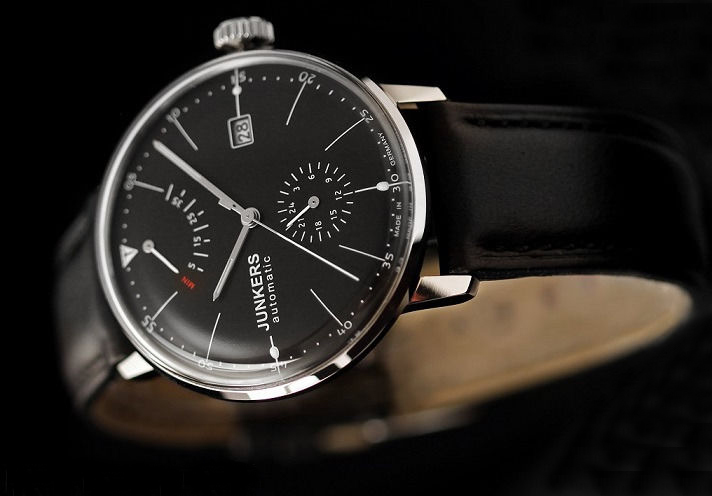
    The Junkers Bauhaus 6060-2 (in black) and 6060-5 (in cream) are automatic watches with a power reserve, 24-hour and date function and hacking seconds. While many people believe the Junkers Bauhaus watches lean too heavily on the Max Bill designed watches, flippantly referring to them as a “Poor Man’s Max Bill”, I think they have a personality and design all their own. Whichever side of the fence you land on, it’s hard to deny that Junkers Bauhaus watches offer a classic Bauhaus design at a great value.
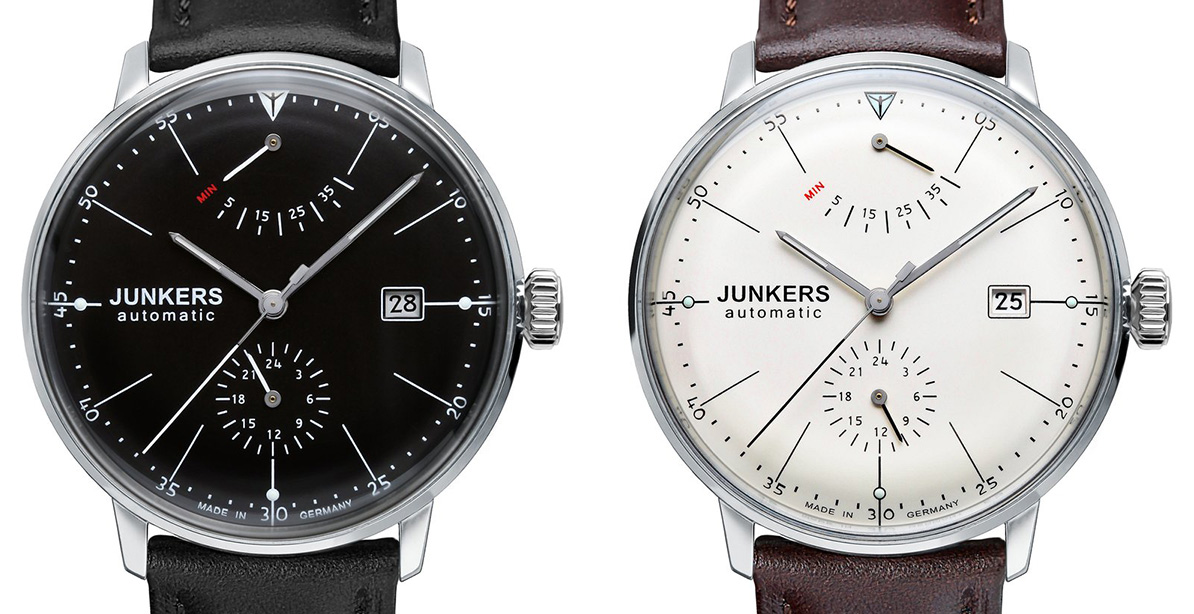
    Junkers Bauhaus 6060-2 Review - dial
    As with all my reviews, I don’t feel comfortable casting judgement on any watch I can’t get my hands on and wear for at least a week. Fortunately, the folks at Junkers (more specifically their manufacturer POINTtec) were nice enough to send me a sample to review.

    Crystal:

    [hr style=”striped”]
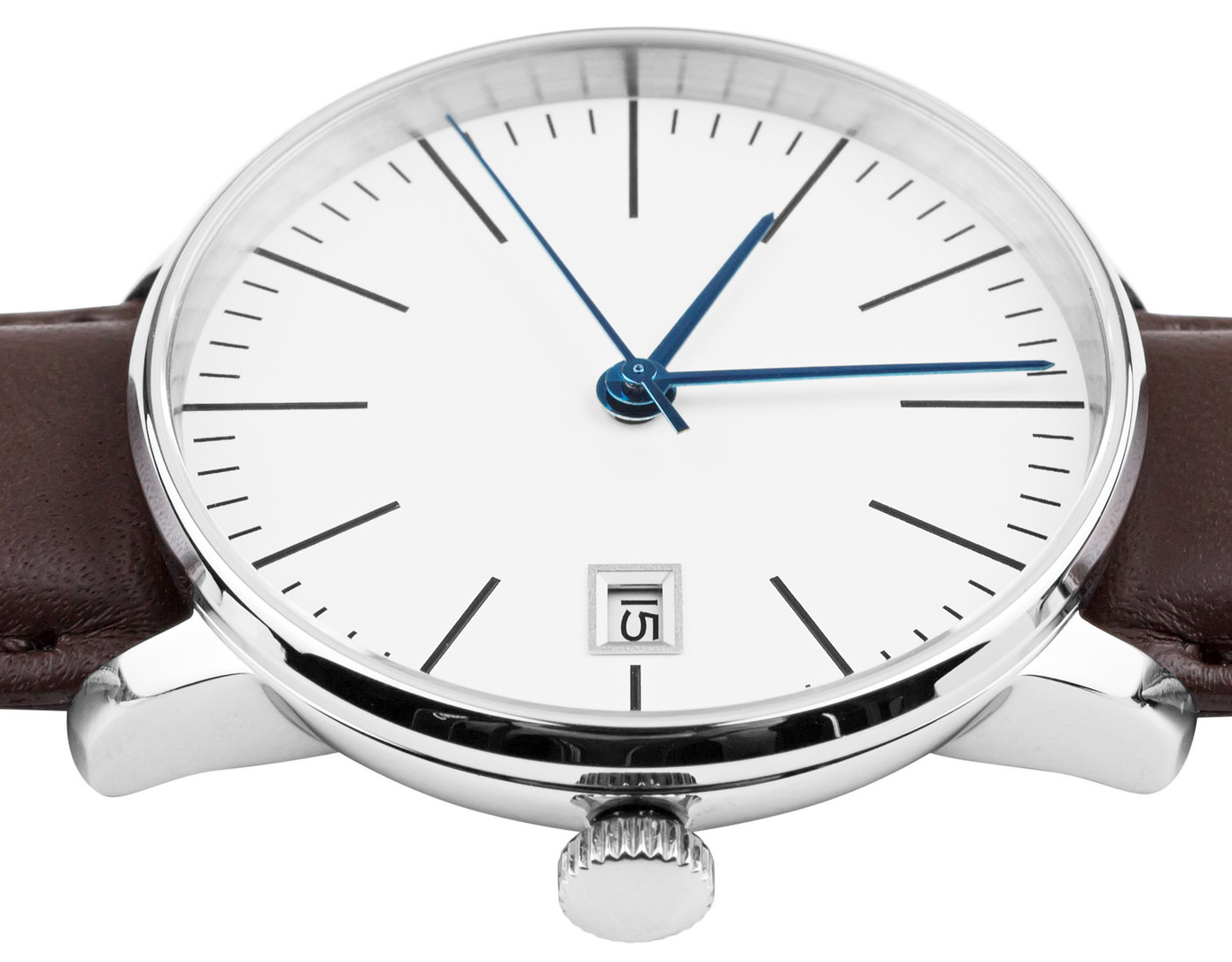
    The crystal on the 6060 is one of the first features you are likely to notice. It is made from domed Hesalite that stands proud of the case and drops down approximately 3mm before connecting with an extremely thin bezel. The effect is that there is no bezel at all and the entirety of the face is taken up by the acrylic. Looking through the crystal at an angle reveals the inverted reflection of the dial below, which further accentuates the round pillowy-ness of the dial. Some people might not like the use of Hesalite on this watch, but with the peculiar shape of the crystal, sapphire would be both extremely expensive to produce and prone to shattering.
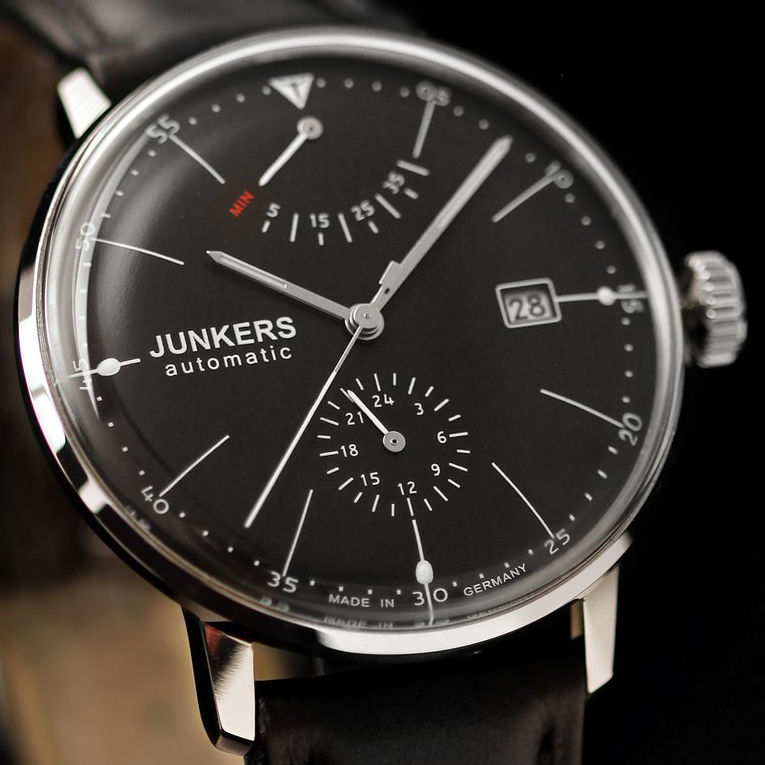
    Junkers Bauhaus 6060-2 Review - Crystal

    Bezel:

    [hr style=”striped”]
    The bezel of the Junkers 6060 is thin at a mere 1mm. The interior wall of the bezel is short and polished to a high gloss. The combined effect of the polished interior wall of the bezel and the curved crystal makes it such that you don’t even see the wall and, instead see a reflected, inverted image of the dial. This isn’t subtle at all. It stands out and for the first few minutes I was inspecting the watch I actually thought the dial was rounded instead of flat. This is one of my favorite aspects of this watch.
    Junkers Bauhaus 6060-2 Review - Bezel

    Case:

    [hr style=”striped”]
    The case has nicely balanced, though somewhat diminutive proportions overall. This may sound like a criticism, but in the context of a Bauhaus watch, diminutive case proportions are necessary. The unbalanced, weighted proportions of the dial and crystal make for a top heavy look that is generally preferred; the case is small so the dial can be large, the bezel is thin so the crystal can be substantial, and the lugs protrude from below so they don’t add to the visual weight of the case. In my opinion, this is all as it should be. Despite the small size, the case still wears comfortably on my 7 inch wrist.

    On profile, the case has a pie-pan shape with the lugs protruding from the falling slope of the side wall. When viewed from above, it looks as if the lugs protrude from behind and below the bezel, lending to the prominence of the dial and crystal.
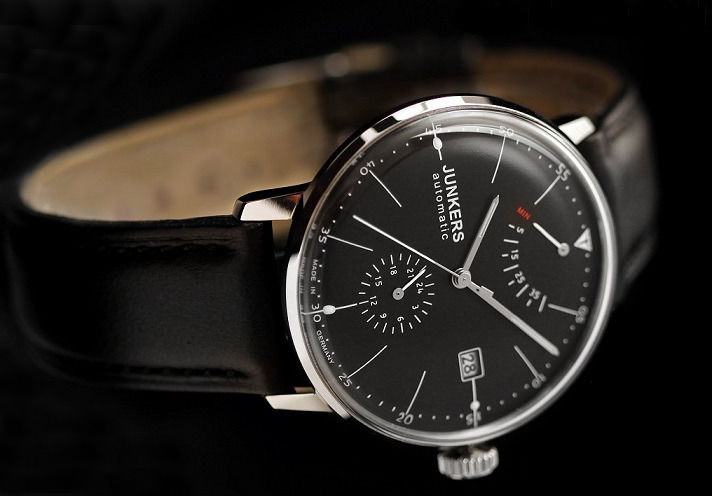
    Junkers Bauhaus 6060-2 Review - Case

    Dial/Hands:

    [hr style=”striped”]
    The dial on the 6060-5 has a nice ash-black background with finely printed crisp white text, numbers and indices. Instead of marking the hour positions with numbers, the dial presents long thin lines and prints the minutes around the perimeter of the dial in 5-minute intervals. This draws your eyes to the outer edge of the dial where the numbers sit on the periphery of the curved dial illusion caused by the glass and the polished interior case wall.

    The hands are all polished silver baton-shaped hands with super-luminova present on the hour and minute hands. The second hand, 24-hour sub hand, and power reserve sub hand are all painted with the same crisp white paint as the dial. My only problem with the hands would be that everything on the watch uses the same crisp white color with the noticeable exception of the hour and minute hand, which have the dull white of untreated super-luminova. The pips on the dial and the Junkers logo at the 12 o’clock position also glow with the same brightness as the hands, and were apparently treated so to appear as crisp white as the rest of the dial. This makes me think that the hands were simply ordered from the manufacturer as-is and weren’t given the same white paint treatment. I wish they had taken the same efforts with the hands as they did with the dial. It would have made for a more uniform color palette.
    Junkers Bauhaus 6060-2 Review - dial


    Lume:

    [hr style="striped"] The lume is actually quite bright, and I'm happy that Junkers went with blue over green. I feel like blue has a cleaner more antiseptic feel to it than green, and this, in my mind, fits well with the overall aesthetics of the watch. My only complaint, as mentioned earlier, is that I wish the lume on the hands had the same white paint appearance as the lume on the dial. This felt like a missed opportunity, and is noticeable on the black-dial version. Junkers also took the opportunity to apply lume to their logo, which I am not normally a fan of, but since their logo is symmetrical and sits at the 12 o'clock position it serves as both a 12 o'clock position marker and nod to the company brand. I'm happy to say this is the single best use of an illuminated logo I've seen in a watch. I like it a lot. Junkers Bauhaus 6060-2 Review - Lume

    Crown:

    [hr style="striped"] The crown is fairly standard with a rectilinear profile and slightly domed end. Looking at it straight on, the Junkers logo is engraved, which gives it a nice touch. The interior portion of the engraving has a whitish color to it, which I thought was lume at first. I believe it is a bead blasting of some sort and looks nice, though I don't know how well it will wear. Junkers Bauhaus 6060-2 Review - Crown
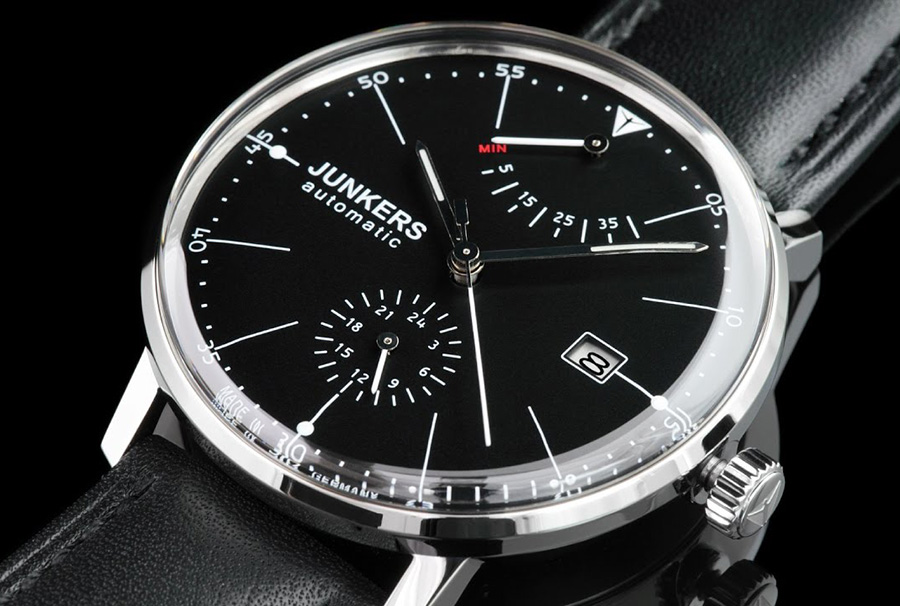
    Strap:

    [hr style="striped"] The strap is a black calfskin leather with a thorn buckle, features a nice taper and was soft and pliable right out of the box. The back of the strap is stamped with "Fatta a mano Cuoio Natural." I believe this means "handmade natural leather" in Italian. I'm not sure where the straps are sourced, but I have no complaints with the fit and finish.

    Movement:

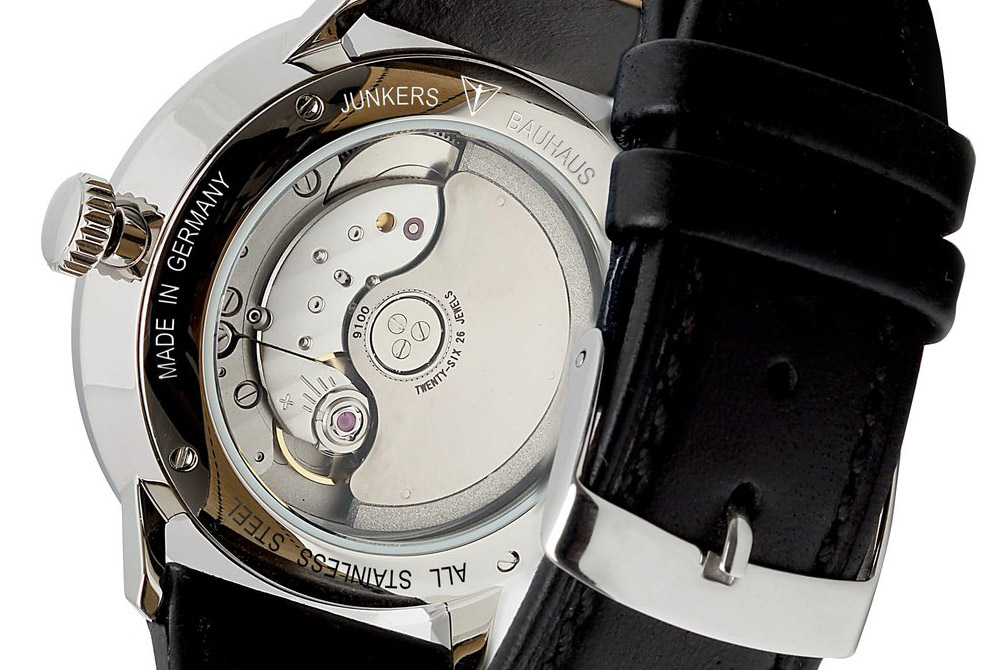
    [hr style="striped"] The movement that came with my watch is a Miyota's caliber 9132, which is a sturdy, reliable movement. This movement gives you hours, minutes, hacking seconds, a 24-hour function, date and finally, a power reserve indicator. That's a lot of complications packed into an affordable watch. I believe the movement also has a day function, which Junkers has opted not to use; a good decision since the dial is already packed with features. One issue I've had with this movement in the past is the noisy rotor that is, unfortunately, extremely noticeable with this watch. It is so noisy, in fact, that at first I was worried there was something loose inside the watch. I think there are multiple factors combined to make this watch so noisy. One is simply that this movement has a noisy rotor; however, I think the unique properties of the small case and large crystal exacerbate the problem. Normally, I don't mind being able to hear a rotor spinning, but this thing is LOUD. Loud and cheap sounding. It has the sound of metal ball bearings bouncing around in a plastic enclosure. Junkers 6060-2 Review - Movement With that said, there are some positives here, too. The Miyota movement has a nice Côtes de Genève decoration, which is always nice. When the crown is fully depressed, winding it will engage the mainspring and wind the watch, which is satisfying since you can noticeably see the power reserve climb with every revolution. It takes approximately 40 turns of the crown to fully wind the watch. The second crown position sets the date, and the third sets the time, which simultaneously sets both the 12-hour and 24-hour hands. The date function is smooth and the transition snaps over at the 12 o'clock position rather than "dragging" like some movements tend to do. Junkers Bauhaus 6060-2 Review - settingJunkers Bauhaus 6060-2 Review - Miyota 9015 Movement
    Accuracy:

    [hr style="striped"] Junkers 6060-2 Review Accuracy

    Packaging/Presentation:

    [hr style="striped"] The watch arrived inside a plain box with a Zeppelin Logo in silver. I get that Junkers and Zeppelin watches are the same thing, but for this watch to arrive in a Zeppelin box was pretty disappointing.

    Conclusion:

    [hr style="striped"] The Junkers Bauhaus 6060-2 is a solid Bauhaus-style watch, with a legitimate pedigree behind it. If you are looking for a smaller size Bauhaus watch with plenty of features that won't break the bank, this may be the watch for you. [button size="small"]Price[/button] $499.00 Leather strap from Amazon.com     I hope you found this Junkers Bauhaus 6060-2 Review helpful! Did I leave something out? Have something to add? Let me know in the comments.
  • My Chinese Air Force Watch-buying Adventure – SeaGull 1963

    My Chinese Air Force Watch-buying Adventure – SeaGull 1963

    Buying a Seagull 1963 reissue 07
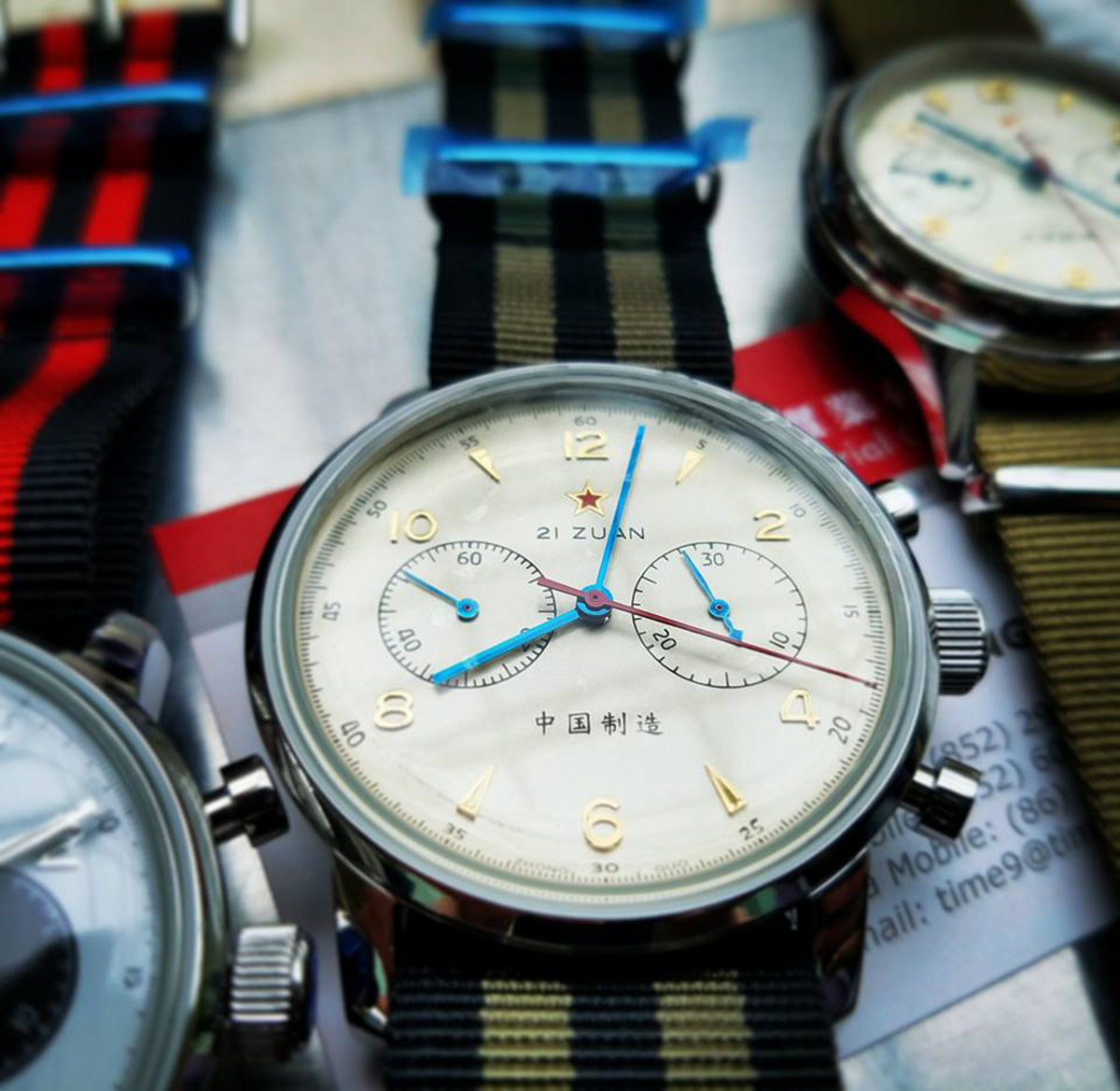
    My wife and I spent about a month traveling around China last year and I knew going into the trip that I wanted to find a Chinese watch as a souvenir from our travels. I didn’t want some generic Chinese watch that was pretending not to be Chinese; I wanted something that was proudly Chinese, something with a tie to the country outside of simply being manufactured there to be exported elsewhere. The SeaGull 1963 seemed to fit the bill with its “21 Zuan” (21 jewels), Chinese characters and vaguely communist red star on the dial.

    As a re-issued watch that was originally produced for the People’s Liberation Air Force, the SeaGull 1963 definitely has a solid association with the country.

    Now that I knew which watch I wanted, I had to track one down. Should be easy enough, right?

    When we first arrived in Beijing, I wandered the luxury shopping districts looking for watch shops. We discovered pretty quickly that China was jam packed with luxury watch dealers.

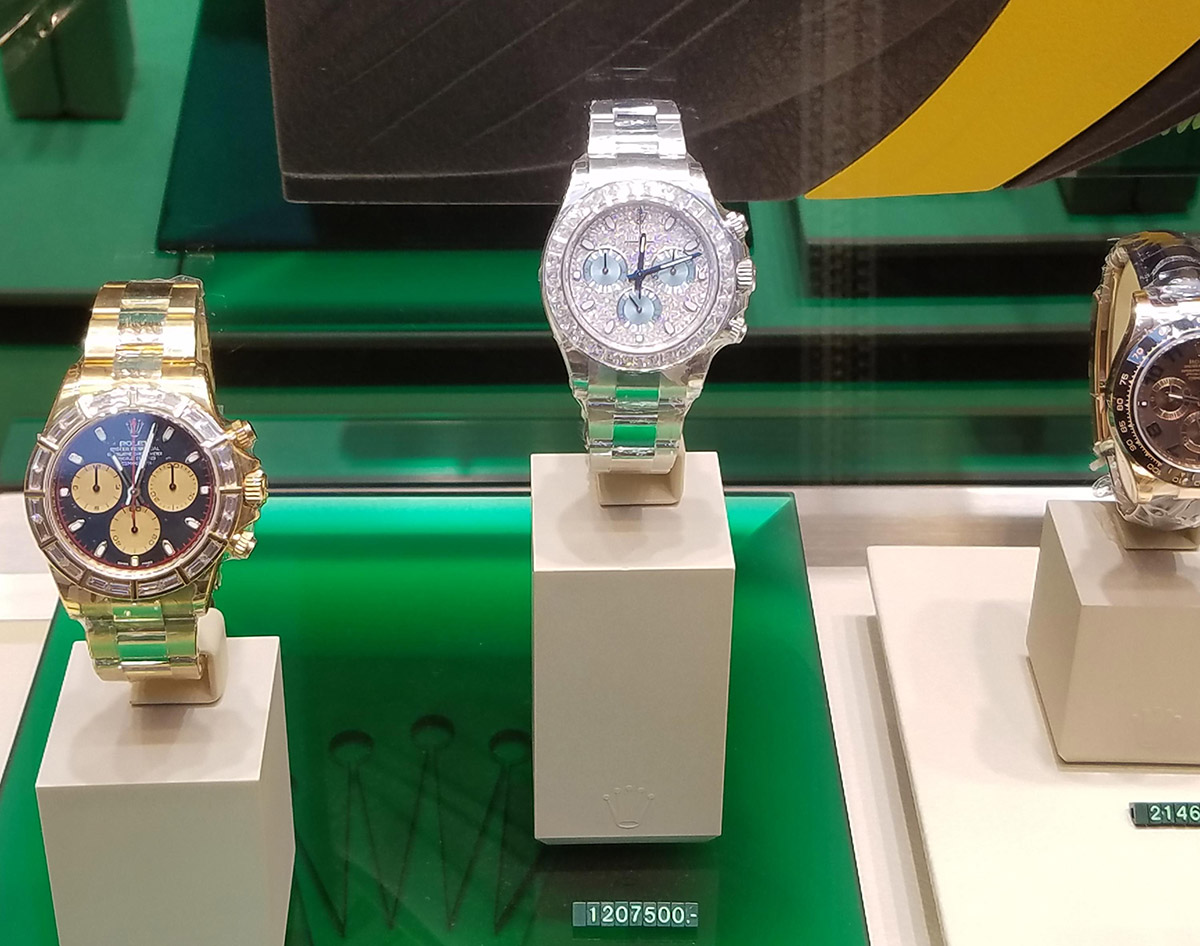
    155,000 dollar rolex daytona
    $155,000 Rolex Daytona

    It seems like every skyscraper in every city in China was anchored to the earth by a Rolex, Cartier, Omega and Zenith foundation. There were so many luxury galleries that some made their employees participate in on-the-hour choreographed dance routines to attract customers. I’m not sure how well that works in practice, but it sure was entertaining.


    This dancing spectacle makes for some great window shopping, but wasn’t exactly what I was looking for. (I wish I was shopping for a $155,000 diamond-encrusted Daytona!)

    I tried searching online for a retailer or dealer that sold SeaGull watches and figured out pretty quickly that getting any useful information on the internet in China, behind the great firewall, without speaking a word of Chinese, was going to be unproductive.

    great firewall of china
    The Great Firewall of China doesn’t want me checking my email

    So, after striking out online and finally getting my VPN configured correctly, I tried emailing SeaGull USA directly. They suggested I tour the factory in Tianjin and purchase a watch directly from the factory, which would have been awesome, but we weren’t going to be anywhere near that part of China. Then, they put me in touch with Thomas, who worked out of Hong Kong and suggested I buy directly from him and have the watch shipped to our hotel.

    Tianjin Seagull watch factory.
    Tianjin Seagull Watch Factory

    That would have been fine, but we were flying all over China and I was nervous about missing the shipment and losing the watch forever in the Chinese postal system.

    When I got in touch with Thomas he said not to worry about shipping, and to call him when we were in Hong Kong. He said he’d be happy to come to us with the watches. Talk about fantastic customer service!

    Buying a Seagull 1963 reissue 03
    We ended up in Hong Kong a few weeks later and Thomas was willing to cross half of Hong Kong to meet us in our hotel lobby. By Chinese standards, Hong Kong is pretty small, but the fact that he was willing to take a couple hours out of his day to meet us in our hotel was pretty astounding to me. He was such a nice guy, spoke perfect English and was happy to hang out with us and talk watches. He explained that Fabrique d’Ébauches S.A. (ESA) sold its tooling for the Venus 175 column wheel chronograph movements to China in 1958, which then evolved into the ST19 movement used today. After the sale, ESA went on to merge with Valjoux and then eventually with the granddaddy of all Swiss movements: ETA.

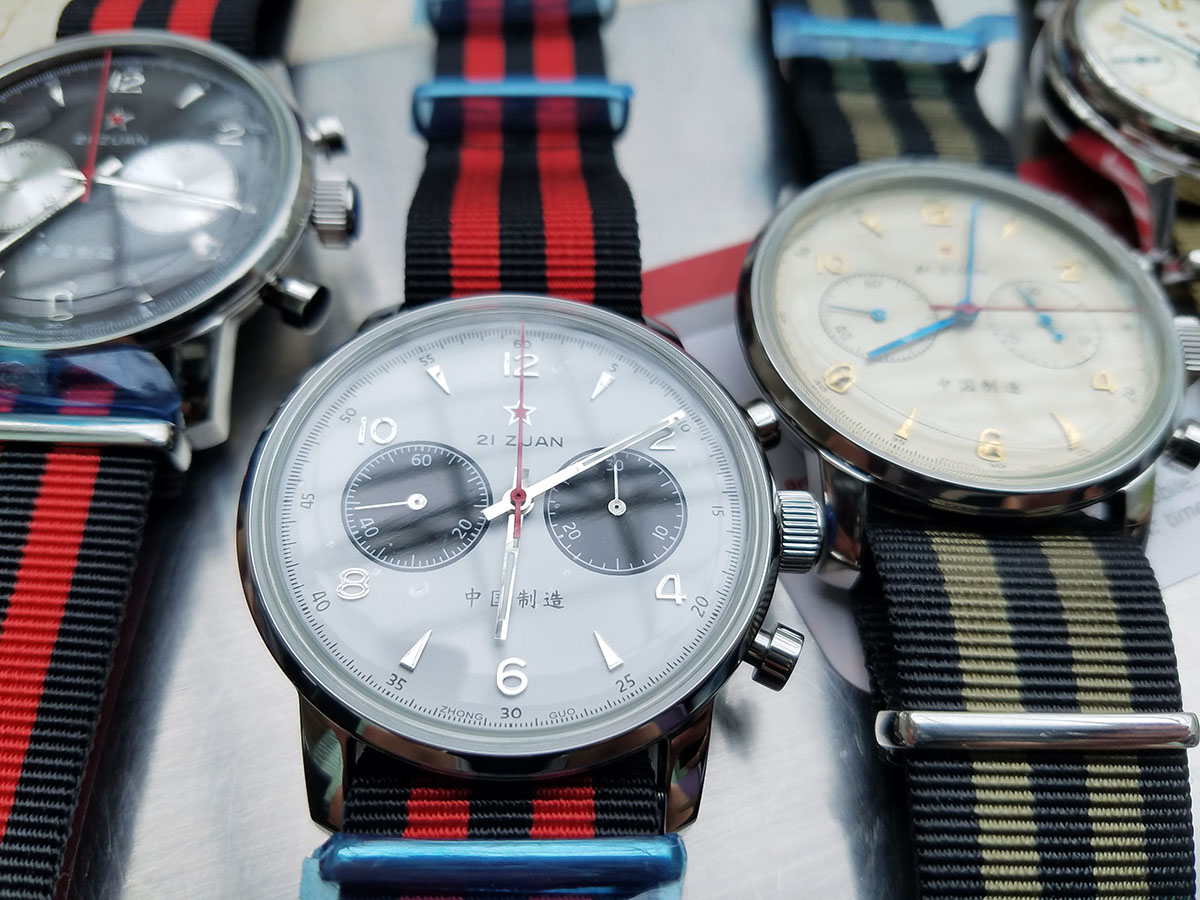
    Buying a Seagull 1963 reissue 04This is the entire SeaGull 1963 family. Left to right, we have the 41mm silver sub-dial on black, 41mm panda dial, 41mm olive dial and finally, the 38mm olive dial.

    Buying a Seagull 1963 reissue 05The 41mm silver sub-dial has a rich black dial with polished chrome numerals, indices and hands. The chronograph hand is bright red and provides some nice contrast to the black/silver dial combination.

    Buying a Seagull 1963 reissue 06The panda color option has a crisp white dial with black sub-dials, again with a red chronograph hand.

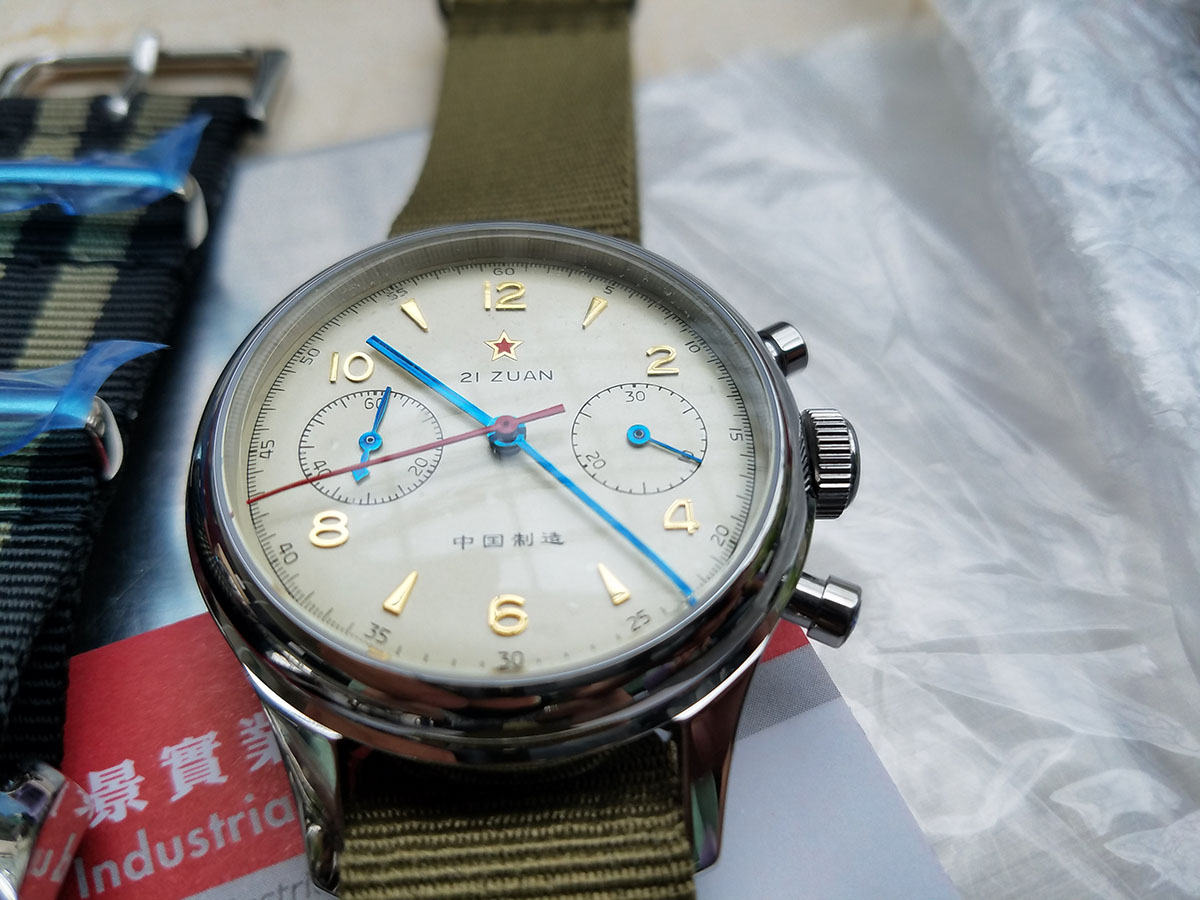
    Buying a Seagull 1963 reissue 07Unlike the black and panda versions, the olive 1963 has flame-blued baton hands without any lume. The olive version also has the gold/red star which is more in line with the Chinese aesthetic I was looking for (The Chinese Army’s logo is a red star with a yellow border.)

    Buying a Seagull 1963 reissue 08This is the 38mm version, which I think is more symmetrically balanced than the 41mm versions. This one has a slightly domed acrylic crystal, whereas the 41mm options have a flat sapphire glass. I would have preferred the 41mm with a domed crystal, but unfortunately, such a thing doesn’t exist.

    Buying a Seagull 1963 reissue 09I ended up going with the 41mm olive color option with the green striped nato.

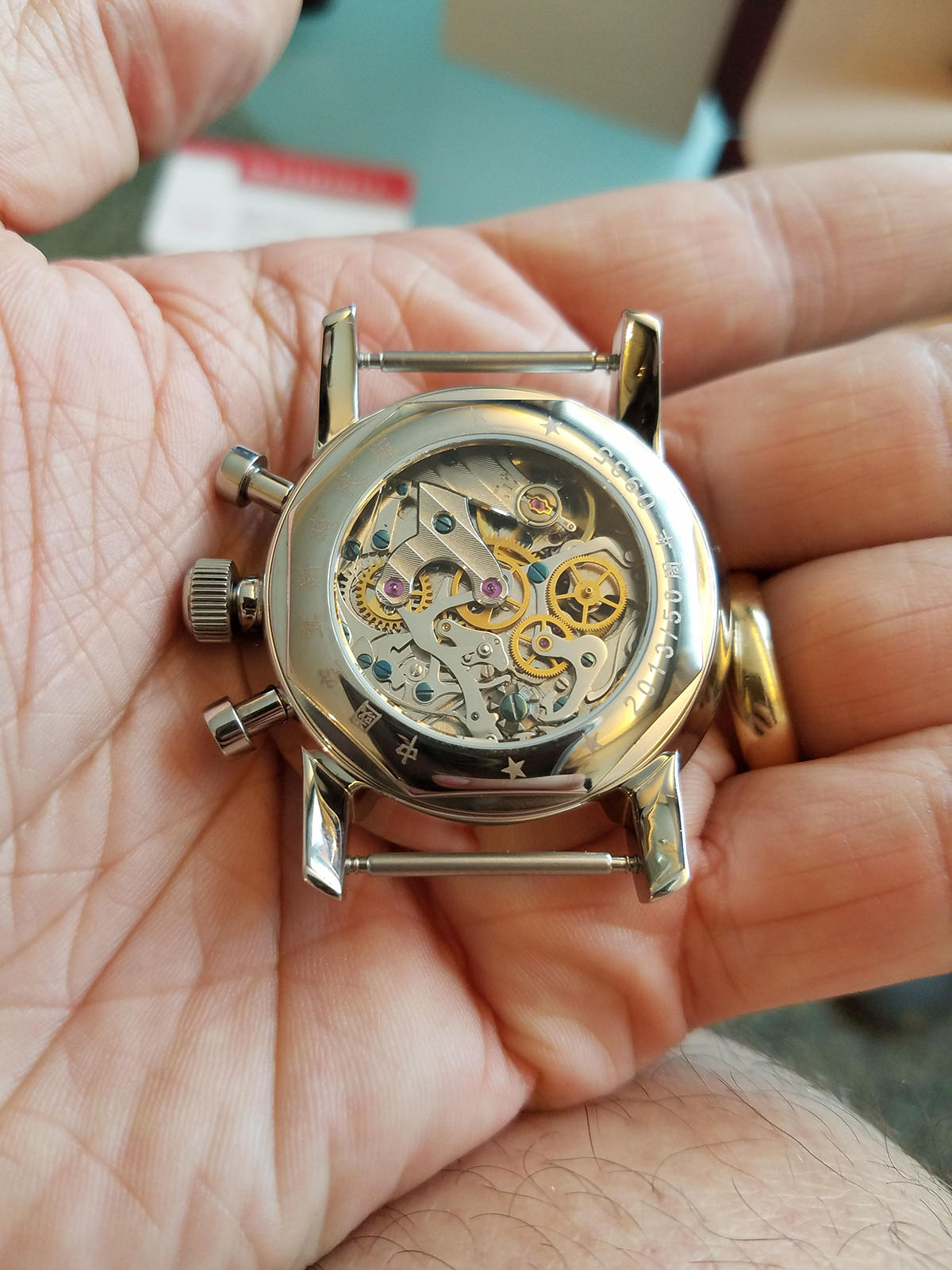
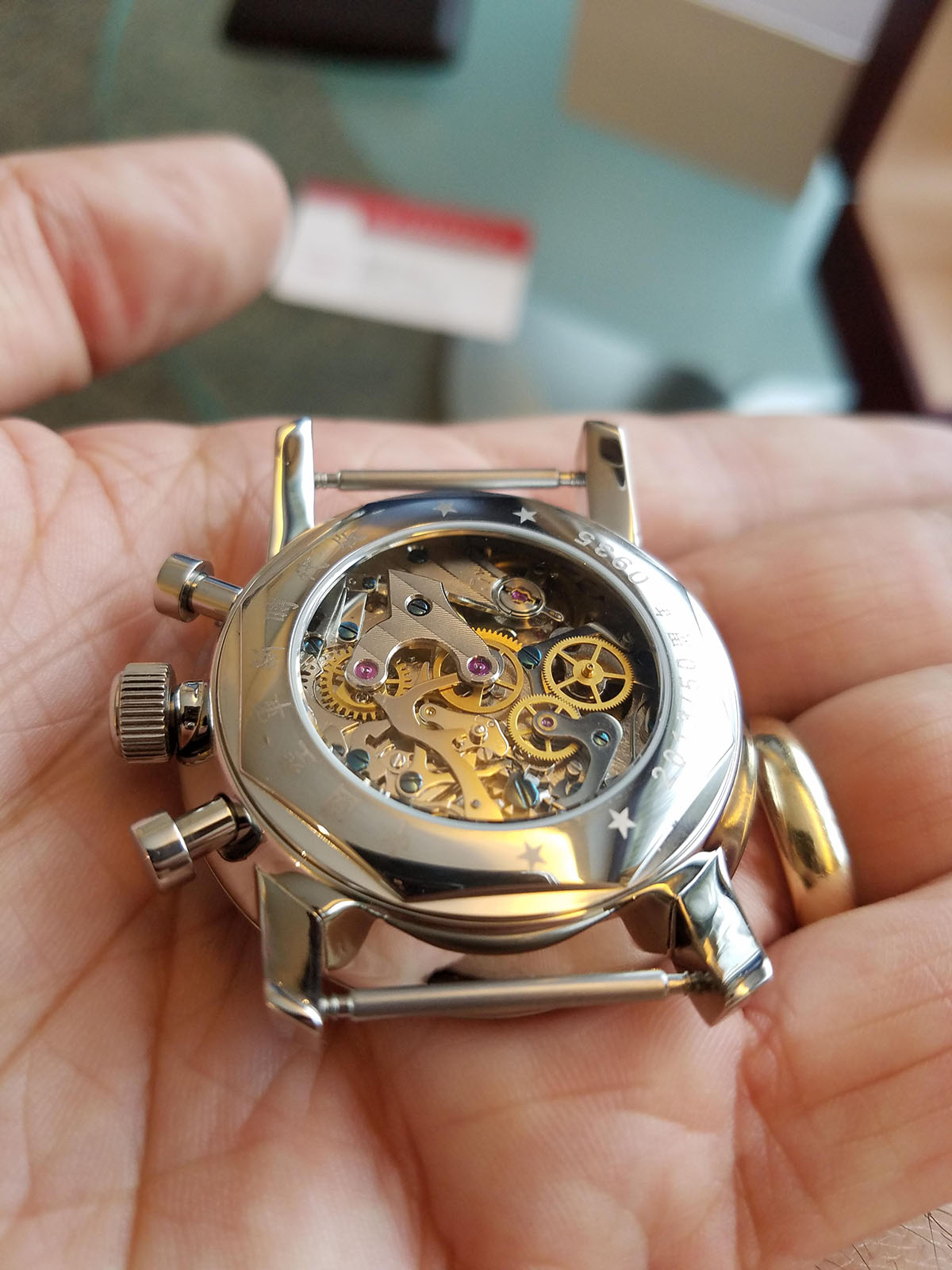
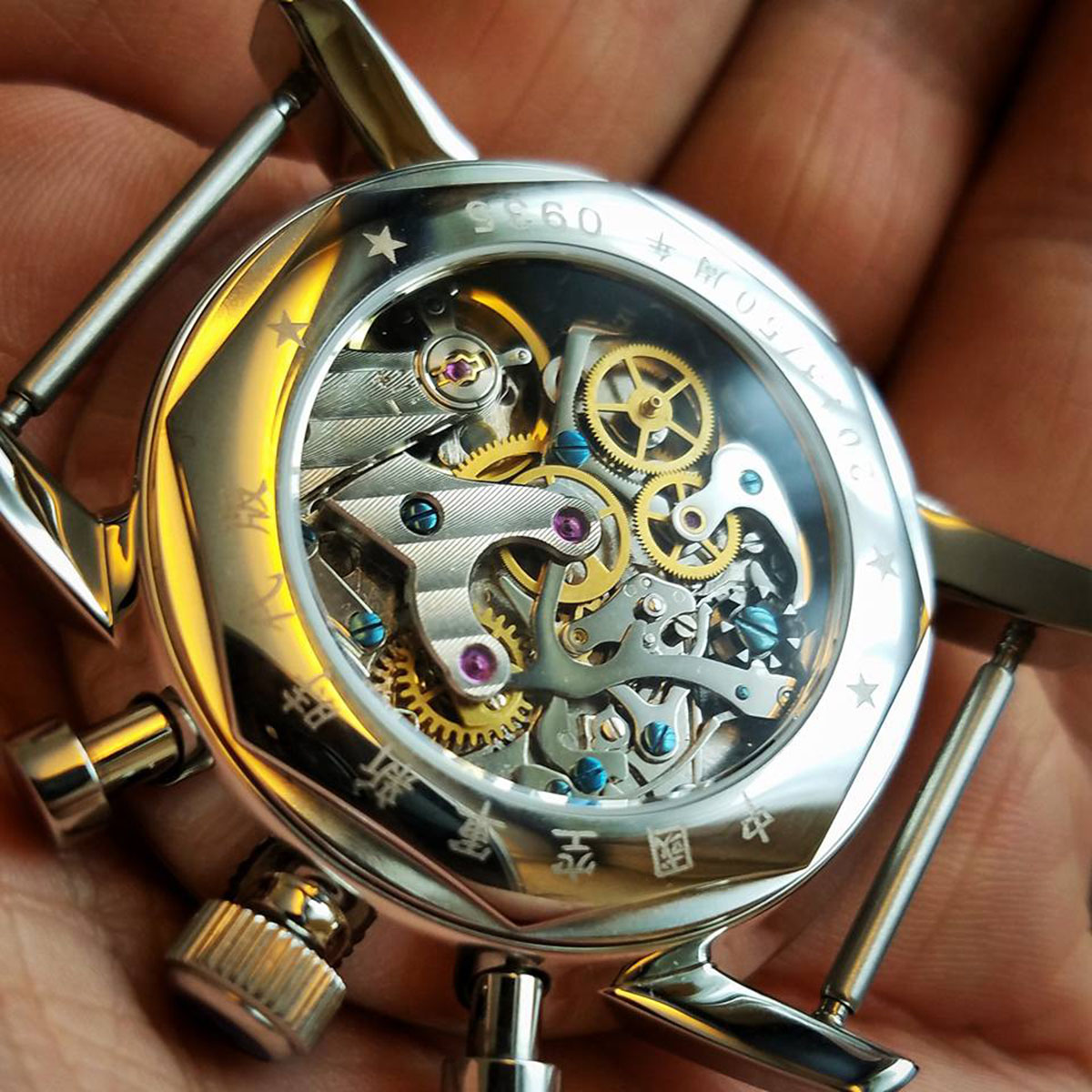
    Buying a Seagull 1963 reissue 10The 41mm options have a nice display case-back that shows off the beautiful intricacies of the chronograph movement, whereas the 38mm version had a solid case-back.

    Buying a Seagull 1963 reissue 11The golden brass wheels, silver steel bridges, red rubies and flame-blued screws make for a great looking movement. Watching everything jump around when you start, stop and reset the chronograph is a treat as well.

    Buying a Seagull 1963 reissue 12

    Luckily, these watches are much easier to find in the United States than they are in China, so if you’re interested in picking one up yourself, you don’t have to look any further than the Amazon links below.

    I don’t think you can find a better value in a watch for 300 dollars.

  • Kent Wang Bauhaus v4 Review

    Kent Wang Bauhaus v4 Review

    Kent Wang Bauhaus V4 Review

    Kent Wang is a small two person menswear company whose origins I think many people can relate to; when they were unable to find affordable clothing and accessories that lived up to their expectations they decided to go into business making their own. I know I have dreamed of doing the same, but they went out and made it happen. The Bauhaus v4 is their take on a Bauhaus inspired watch, which takes its modernist design queues from the Staatliches Bauhaus Art school in Germany, whose influences helped shape 20th century industrial design.

    The Bauhaus v4 is the fourth iteration of their Bauhaus watch line and is my favorite of the bunch, however it is worth noting that the v2 and v3 options are still available to purchase though KentWang.com. They each have subtle differences, so I would encourage you to take a look at the whole lineup before making a decision.

    As with all of the reviews here, I don’t feel comfortable casting judgement any watch I can’t get my hands on and wear for at least a week. Fortunately, the folks at Kent Wang were nice enough to send me a sample to review.

    Crystal:

    [hr style=”striped”]
    The sapphire glass on the Bauhaus v4 is completely flat and stands very slightly proud of the bezel. The fact that the glass is flat means it can be prone to reflection and glare. The inclusion of anti-reflective coating, or a curved glass would alleviate this, but with the high contrast of the dial it really wasn’t a problem for me during the time I wore it.
    Kent Wang Bauhaus v4 Review 10

    Bezel:

    [hr style=”striped”]
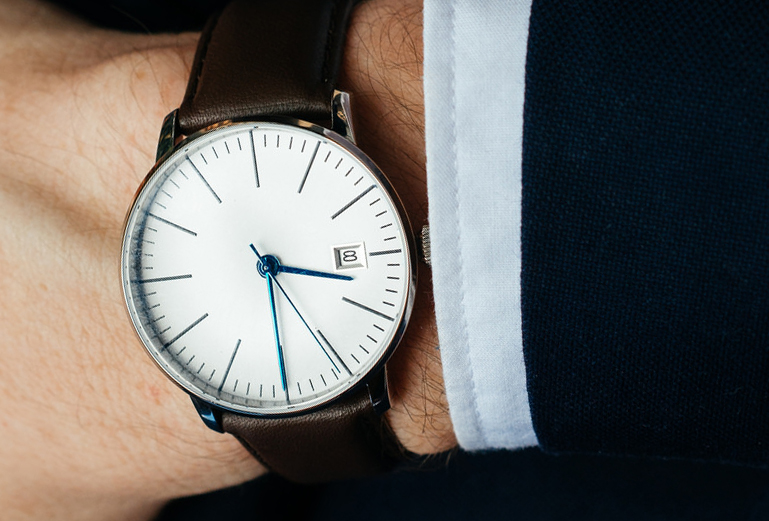
    The Bezel on the Bauhaus v4 is very thin at a mere 1mm. The interior wall of the bezel is completely vertical with a brushed steel appearance. You would only really notice the texture upon close inspection, but it looks nice none the less. This narrow bezel lends itself to a large looking face, which to me is preferable in a Bauhaus style watch. The thinner bezel is one of the main differences between the v3 and v4 watches and I think it was a great improvement overall. On profile the polished surface of the bezel has a slight chamfer which catches the light nicely.
    Kent wang Bauhaus v4 Review 09

    Case:

    [hr style=”striped”]
    The case has very nice overall proportions and sits comfortably on the wrist. The low profile of the case combined with the flat sapphire crystal mean it should slip under the cuff of any shirt. This paired with its classic minimalist styling make it a great option for a dress watch. The caseback has a nice display window with a subtle “Kent Wang” engraved on the side. This is the only branding present on the watch.
    Kent Wang Bauhaus v4 Review - Movement

    Dial/Hands:

    [hr style=”striped”]
    The dial has a completely white un-textured finish with printed black indices. The ink used to print the indices is slightly glossy and unfortunately gives the dial an ink-on-paper feeling. I feel like this cheapens the overall look of the dial on close inspection, but really isn’t noticeable at a casual glance. If I could make one change to the dial for the v5 it would be to either use applied indices (as they did on the Bauhaus v3), or matte black ink.

    The hands are a nice deep flame blued color which appear black when they are not directly reflecting light. The width of the minute hand is exactly the width of the hour markers, which is a nice touch that is often overlooked in minimalist watch designs. As you would expect with a quality watch, the hands line up perfectly.

    The scale of the hands to indices to bezel feels good with the slight exception of the hour hand which feels a little bit short when compared with the elongated indices on the dial. I think a slightly longer hour hand would help to balance the dial. Another slight nit-pic I have with the hands is again with the hour hand. I generally like my hour hands to completely cover the date window or not touch it at all when at the 3 o’clock position. Again, if the hour hand were slightly longer it would cover the date window rather than stopping half way across it. It’s a minor annoyance which would probably go unnoticed, but since this is a watch with a continually evolving and improving design I figured it was worth mentioning.
    Kent Wang Bauhaus v4 Review 04

    Lume:

    [hr style=”striped”]
    The Kent Wang Bauhaus v4 has no lume, however the high contrast dial design still makes for a pretty legible watch in low light situations.

    Crown:

    [hr style=”striped”]
    When I first unboxed the watch I was surprised to see a rich blue dot on the end of the crown. I hadn’t been expecting that at all, and was actually impressed with the way the pop of color on an otherwise colorless watch caught my eye. That was, however, until I realized it was just a sticker to protect the polished crown. Oh.

    That said, the crown is actually quite nice. It resembles more of a scaled down onion type crown that you would find on a pilot watch. I figured with all of the straight lines inherent in Bauhaus styling the crown would also be straight. I’m glad it isn’t. The slightly pillowy-ness of the crown works well with the profile of the case and the curvature of the lugs. It is easy to grasp and has a nice pop and click when pulling and setting.
    Kent Wang Bauhaus v4 Review - Crown

    Strap:

    [hr style=”striped”]
    The strap on the Bauhaus v4 is a fairly generic brown leather strap. That’s not to say there is anything wrong with it, on the contrary, it is actually pretty nice; it just doesn’t have much personality on its own. The one I received was a dark brown leather, with brown thread and a polished buckle. It has a nice thickness to it and feels well made. It was a little bit stiff at first, but after wearing it for about a week it had softened up and was quite comfortable. If you are looking for a strap with a little more personality Kent Wang offers both a shell cordovan strap and a lizard strap.
    Kent Wang Bauhaus v4 Review - Strap

    Movement:

    [hr style=”striped”]
    The movement under the hood is Miyota’s caliber 9015, which is a sturdy, reliable movement. One issue I’ve had with this movement in the past is the fact that the rotor can be quite noisy. Luckily, with the Bauhaus V4 that doesn’t seem to be an issue. Between the solidly constructed case and the sapphire glass I don’t notice any noise at all.

    The Miyota movement has a nice côtes de Genève decoration which is always nice to see when a watch has a display caseback. I think all watch movements are beautiful and always appreciate a display caseback no matter what, but when you get a decorated movement as well it’s an especially nice treat.

    When the crown is fully depressed winding it will engage the mainspring, which is very handy if you don’t have a watch winder. A couple seconds winding the crown and you are ready to set the time and go. The second crown position sets the date, and the third sets the time. The date function is smooth and the transition snaps over at the 12 o’clock position rather than “dragging” like some movements tend to do.
    Kent Wang Bauhaus v4 Review - settingKent Wang Bauhaus v4 Review Miyota 9015 Movement

    Accuracy:

    [hr style=”striped”]
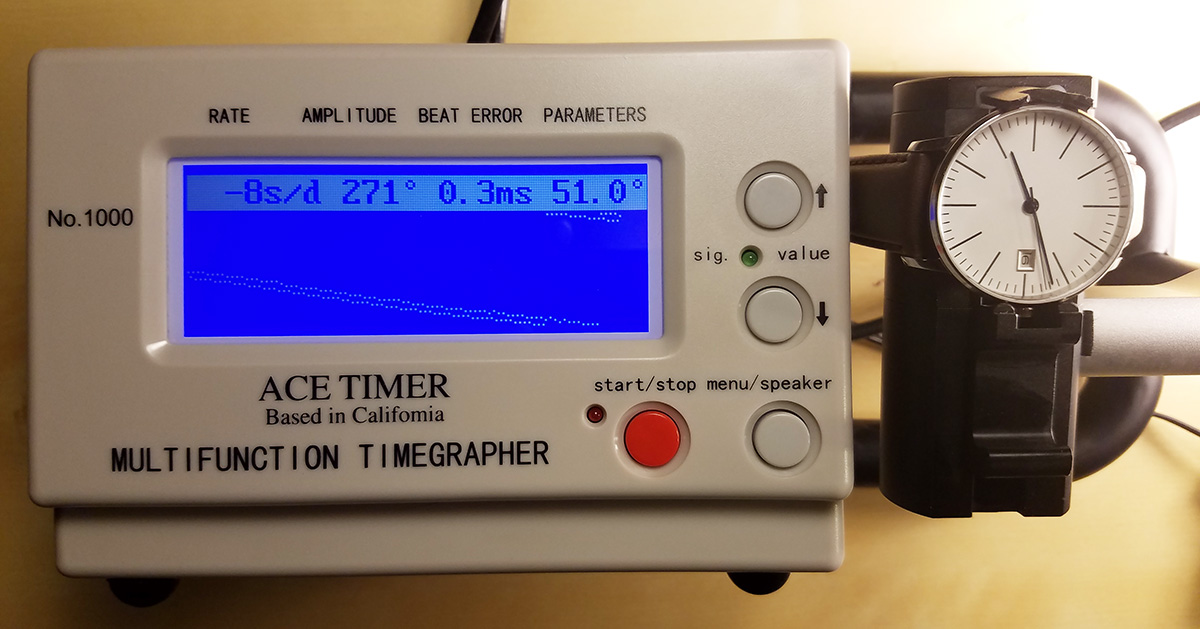
    The accuracy of my watch was perfectly acceptable and within spec for this movement. I measured it in four different positions at full wind with an hour in each position (dial up, dial down, crown up, crown down). This gave me an average of -9 seconds a day, meaning for every 24 hour period my watch will lose 9 seconds.
    Kent Wang Bauhaus V4 Accuracy

    Packaging/Presentation:

    [hr style=”striped”]
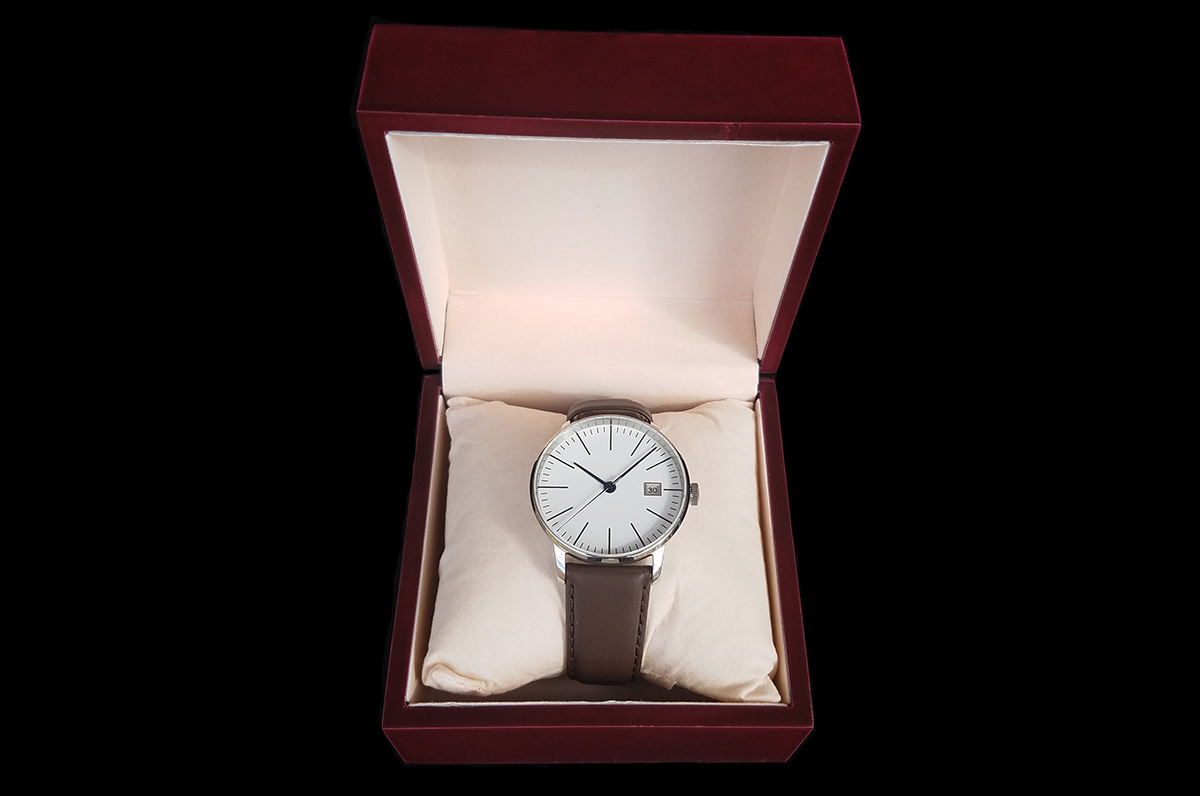
    The watch arrived inside a wooden box with an off white watch pillow. For a watch that is completely unbranded it wasn’t surprising to see that the box lacked branding as well. In a world where brands and logos leap off of every surface, a product like this with very minimal branding is something I really appreciate about Kent Wang’s products.
    Kent Wang Bauhaus v4 Review - Packaging

    Conclusion:

    [hr style=”striped”]
    The Kent Wang Bauhaus v4 is an all around solid choice for anybody looking for a handsome Bauhaus styled watch. Kent Wang took quality components, solid design choices, zero obnoxious branding, and packaged it together into a outstanding watch at a great price point. If you are looking for something in the Bauhaus style I can definitely recommend this watch, and if you want something that is unbranded this is the watch for you.

    [button size=”small”]Options[/button]

    The Bauhaus v4 is available in white with optional cordovan strap or lizard strap upgrades.

    [button size=”small”]Price[/button]

    $395 From KentWang.com


    I hope you found this Ket Wang Bauhaus v4 review helpful! Did I leave something out? Have something to add? Let me know in the comments.

  • Bergeon 6767 Spring Bar Tool Review

    Bergeon 6767 Spring Bar Tool Review

    Bergeon 6767 Spring bar tool Review

    Any watch enthusiast should have a set of tools to help maintain their watches, and at the very top of my list of suggested tools is the humble Spring Bar Tool. Designed to simply depress a spring bar, this is a tool that you might not think you need, but trust me; you do.

    When working with small delicate parts it’s always best to use the correct tool for the job. I’ve seen countless watches with scratched up lugs and case-backs because somebody figured they could get away with swapping out a strap using by using their cheap eyeglasses screwdriver set. Is it possible? Sure, but why use the wrong tool and potentially damage your expensive watch when investing in a quality spring bar tool could make the process so, so much easier.

    So what exactly is a Spring Bar?

    [hr style=”striped”]
    Spring bars are the tiny little spring loaded pins that hold watch straps in place. In most watches the bar will fit through the last link on your watch’s bracelet and snap into two corresponding holes or divots in the lugs of the watch head. There are usually two spring bars, one on each end, but some bracelets might have four or even six. Most spring bars will have little ridges or shoulders that the spring bar tool can fit into making the process easier.

    Bergeon 6767 Spring Bar Tool Review 03

    Ok, so why do I need a special tool?

    [hr style=”striped”]
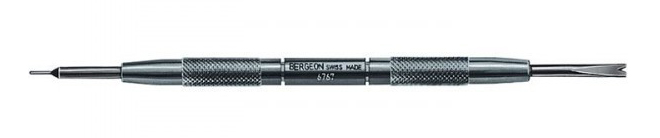
    When you are working with very small components even the most simple of mechanical tasks can become quite difficult. The Bergeon 6767 Spring bar tool is a high quality tool designed make the task of removing watch straps and bracelets as painless as possible. The forked end is large enough to bite into the shoulder of a spring bar, but also small enough to fit into the tightest bracelets. This gives you the best possible leverage in this small area, and reduces the potential for slippage so you don’t accidentally put a big scratch in your watches nice finish. On the opposite end is a stainless steel 0.80mm pointed end that is perfect for pushing out cotter pins or depressing spring bars from the side if your watch has drilled lugs. Each tip is removable and has identical threading making it easy and convenient to change or replace the tips as necessary.
    Bergeon 6767 Spring Bar Tool Review

    How do I remove the spring bars?

    [hr style=”striped”]
    In order to remove a spring bar that’s fitted into a watch you need to use the wedge shaped end of the tool. Position it in between the two grooves that run round the end of the spring bar. Keeping it at a 90 degree angle, apply firm pressure and push inwards towards the center of the spring bar. This will compress it and allow you to pop it out from between the lugs on the watch head.
    Bergeon 6767 Spring Bar Tool Review 02

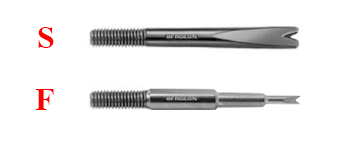
    The Burgeon 6767 comes in two flavors: “F” and “S”

    [hr style=”striped”]
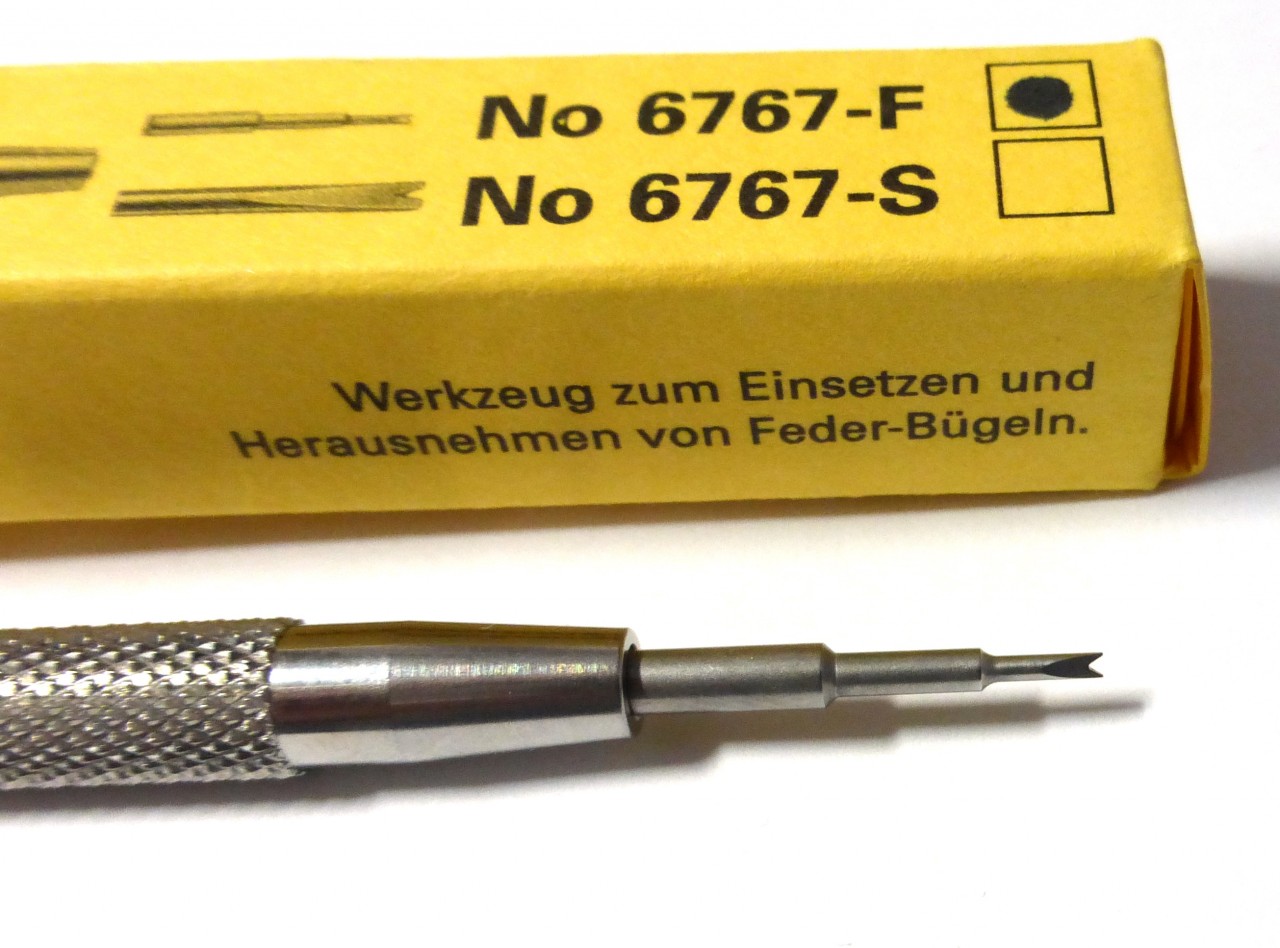
    Generally the “F” tip is better suited for metal bracelets. It has a smaller diameter shaft to fit into the smaller openings in metal bracelets. The “S” tip is made with leather straps in mind, and as such has blunted ends and a wedge shape shaft. The blunted ends make it less likely to gouge the leather around the spring bar, and the wedge gives you better clearance when prying against the edge of the strap.

    Bergeon 6767 Spring Bar Tool Review 04
    Bergeon 6767 Spring Bar Tips – F is better for metal bracelets and S is better for leather straps

    [hr style=”striped”]

    [button size=”small”]Options[/button]

    The Bergeon 6767 Spring Bar Tool is available in both “F” and “S” varieties. My recommendation would be to purchase the one you will use the most, and then purchase the other tip separately. You can always swap tips as needed.

    [button size=”small”]Price[/button]

    $26.36 Bergeon 6767 Spring Bar Tool “S” at Amazon.com
    $21.99 Bergeon 6767 Spring Bar Tool “F” at Amazon.com

    $11.99 Replacement 6767 “S” Tip at Amazon.com
    $11.99 Replacement 6767 “F” Tip at Amazon.com


    I hope you found this Bergeon 6767 Spring Bar Tool Review helpful! Did I leave something out? Have something to add? Let me know in the comments.


  • Laco Augsburg Review (Type-A)

    Laco Augsburg Review (Type-A)

    Laco Augsburg Review (Type-A)

    [hr style=”striped”]
    Laco is a german watch manufacturer founded in 1925 by Frieda Lacher and Ludwig Hummel. Early in their history Laco began manufacturing Fliegeruhren, or Pilot’s watches, that eventually caught the attention of the German military. With this attention came contracts from the German Airforce to manufacture the infamous Beobachtungsuhren watches for bombers during WWII.

    Designed by the Reichs-Luftfahrtministerium, Laco wasn’t directly responsible for the design of the watches, only the manufacturing. After the end of WWII Laco, like many other German watch manufacturers began reproducing flieger watches under their own brand, experimenting with slight design variations and manufacturing techniques that led directly to the commercially available offerings today.

    If you visit Laco’s website you’ll find an overwhelming amount of flieger watch variations, each with their own unique names, but today we will be focusing on one of their more popular watches, the Laco Augsburg Type-A.

    Crystal:

    [hr style=”striped”]
    The crystal is a very slightly domed sapphire that sits below the edge of the case. Like most of Laco’s watches, the Augsburg has a sapphire display caseback as well, which is a nice bonus.

    Laco Augsburg Review Type B 03
    Laco Augsburg Review – Domed Sapphire Crystal

    Case:

    [hr style=”striped”]
    The case is 42mm in diameter and is made from stainless steel with a sandblasted matte finish on the bezel and lugs. Unlike the front, the case back uses polished stainless steel, which to me seems out of place with the matte finish on the rest of the watch. It is also rather thick at just over 12mm. This thickness is partly due to the deep recess created by the space above the dial and hands, and in part due to the thickness of the automatic Miyota movement.

    Dial/Hands:

    [hr style=”striped”]
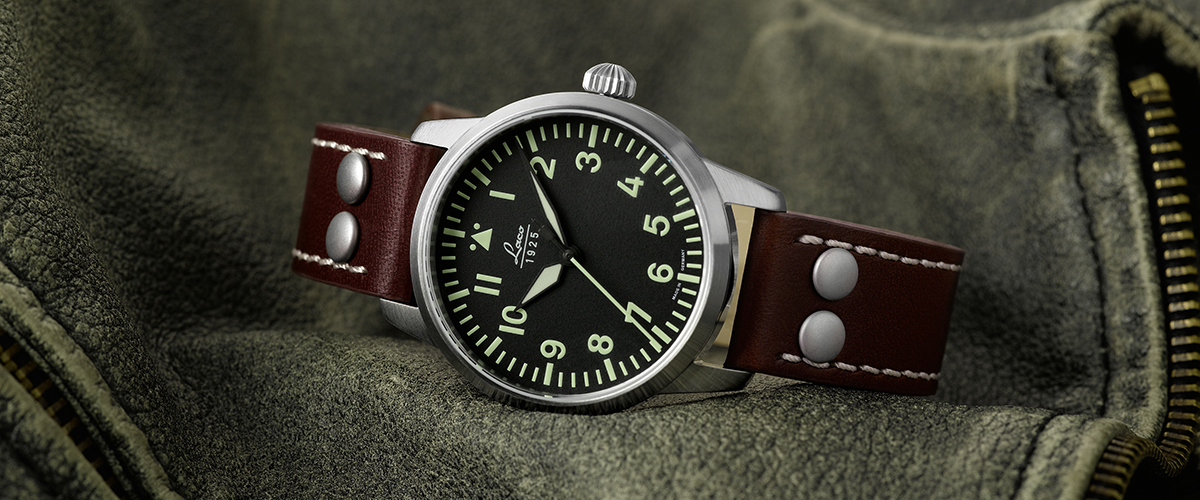
    The dial on the Augsburg, like all Type-A dials, is very minimalistic and uncluttered. These watches were originally intended for pilots to be able to read at a glance, so the minimalistic design is part of the appeal of a Type-A Flieger. The dial is a slightly grey black, which is more noticeable in direct light. The indices and hands have a greenish hue to them due to the superluminova C3 paint. Some people dislike this, but to me it is a perfectly fine color, and is actually more in line with the original Luftwaffe watches. The hands aren’t blue like the original Beobachtungsuhren watches, and instead are painted black. This makes for a more crisp glow at night, but I still prefer the original blued hands.

    Laco Augsburg Review - Dial & Hands
    Laco Augsburg Review – Dial & Hands

    Lume:

    [hr style=”striped”]
    Laco uses Superluminova C3 on the Augsburg, and there is plenty of it making for a nice bright watch that is easy to read at a glance. Where as the original Flieger watches only had lume on every other number, Laco opted to use lume on each number. This is a deviation from the original design, but many people prefer it and it does make for a more symmetrical design when viewed at night.

    Laco Augsburg Review Type B 02
    Laco Augsburg Review – Lume

    Crown:

    [hr style=”striped”]
    The crown on the Augsburg, like the Aachen, is another interesting deviation from the original design. Unlike the usual onion crown that is thinner at the base and flairs out, Laco went for a dome shaped crown that is wide at the base and rounded at its point. Where as the original shape was more convenient to grip with a gloved hand, this shape is probably more comfortable for daily use. I should point out that if this is a make it or break it feature for you, Laco does employ the traditional crown shape in its more expensive ETA based watches such as the Replica 45

    Laco Augsburg Review - Crown
    Laco Augsburg Review – Crown

    Strap:

    [hr style=”striped”]
    The strap on the Augsburg is aesthetically similar to the thick leather straps that define the Flieger watch style with thick brown riveted leather. The leather and craftsmanship on the strap are slightly lacking, but luckily the strap is the easiest part to replace on any watch. This one does the job, but I wouldn’t expect it to last long or age particularly well.

    Movement & Accuracy:

    [hr style=”striped”]
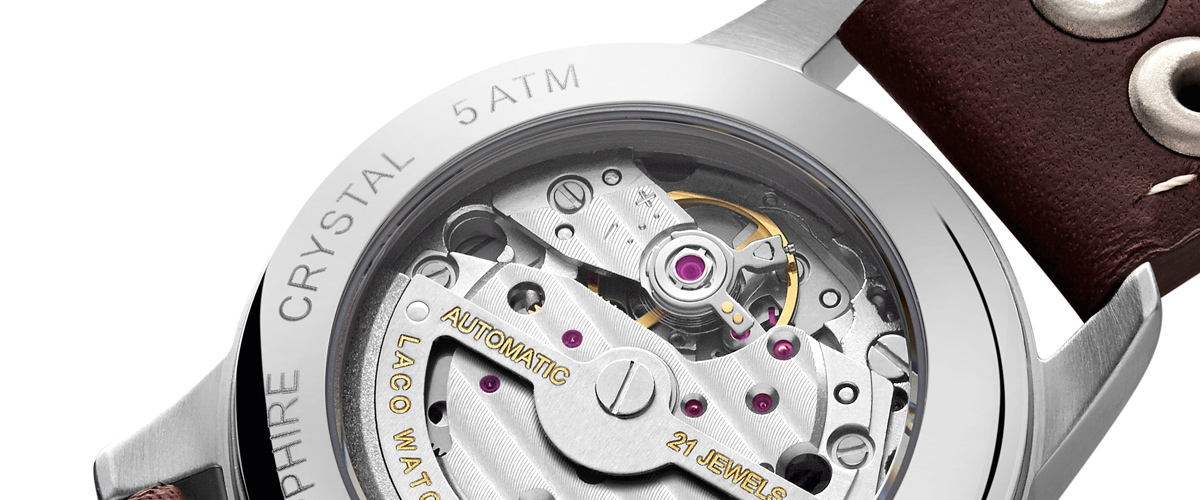
    The Augsburg is listed as having the Laco 21 movement, which is really just a stock Miyota 8215 movement with a Laco branded rotor. There is nothing wrong with that in practice, in fact many many high end manufacturers do exactly the same thing, but it’s nice to know what you are actually buying. The movement itself is a 21,600BPH movement, meaning it ticks 6 times per second. The rotor winds in a single direction and spins freely in the other, the result being that it winds up more slowly and can sometimes be noisy. I didn’t personally notice much noise in the movement, but it is a complaint that many people have reported.

    Laco Augsburg Review - Exhibition caseback with sapphire glass showing the Miyota movement
    Laco Augsburg Review – Exhibition caseback with sapphire glass showing the Miyota movement

    Conclusion:

    [hr style=”striped”]
    Laco has a rich and interesting history and makes a wide variety of watches to meet every price point. The Augsburg is a very budget friendly watch with a direct lineage going all the way back to the very genesis of this design. If that is something that appeals to you, then this could be the watch to jump on. Every Laco watch comes with a 2 year warranty, and the fact that you can get them on amazon makes it an even safer purchase.

    [button size=”small”]Options[/button]

    Laco produces a dizzying array of options for this design, from different dial colors, to movement options and case variations; too many to list here. Your best bet is to visit their website or download their catalog.

    [button size=”small”]Price[/button]

    $284.00 Laco Augsburg Type-A From Amazon


    I hope you found this Laco Augsburg Review helpful! Did I leave something out? Have something to add? Let me know in the comments.


  • Laco Aachen Review (Type-B)

    Laco Aachen Review (Type-B)

    Laco Aachen Review (Type-B)

    Laco is a german watch manufacturer founded in 1925 by Frieda Lacher and Ludwig Hummel. Early in their history Laco began manufacturing Fliegeruhren, or Pilot’s watches, that eventually caught the attention of the German military. With this attention came contracts from the German Airforce to manufacture the infamous Beobachtungsuhren watches for bombers during WWII.

    Designed by the Reichs-Luftfahrtministerium, Laco wasn’t directly responsible for the design of the watches, only the manufacturing. After the end of WWII Laco, like many other German watch manufacturers began reproducing flieger watches under their own brand, experimenting with slight design variations and manufacturing techniques that led directly to the commercially available offerings today.

    If you visit Laco’s website you’ll find an overwhelming amount of flieger watch variations, each with their own unique names, but today we will be focusing on one of their more popular watches, the Laco Aachen Type-B.

    Crystal:

    The crystal is a very slightly domed sapphire that sits below the edge of the case. The Aachen has a sapphire display caseback as well, which is a nice bonus.

    Laco Aachen B-type Sapphire Crystal
    Laco Aachen B-type Sapphire Crystal

    Case:

    The case is 42mm in diameter and is made from stainless steel with a sandblasted matte finish on the bezel and lugs. Unlike the front, the case back uses polished stainless steel, which to me seems out of place with the matte finish on the rest of the watch. It is also rather thick at just over 12mm. This thickness is partly due to the deep recess created by the space above the dial and hands, and in part due to the thickness of the automatic Miyota movement.

    Dial/Hands:

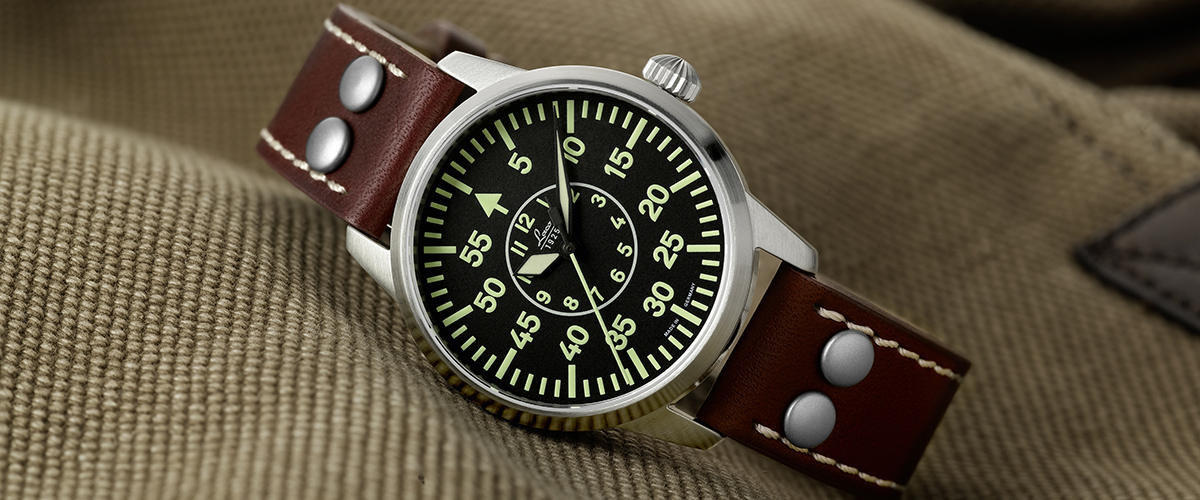
    The dial and hands have a nice balance in proportion. The dial is a slightly grey black, which is more noticeable in direct light. The indices and hands have a greenish hue to them due to the superluminova C3 paint. Some people dislike this, but to me it is a perfectly fine color, and is actually more in line with the original Luftwaffe watches. The hands aren’t blue like the original Beobachtungsuhren watches, and instead are painted black. This makes for a more crisp glow at night, but I still prefer the original blued hands.
    Laco Aachen B Review 05

    Lume:

    Laco uses Superluminova C3 on the Aachen, and with thick type-b hands there is plenty of it. As with most Superluminova watches, they can be spectacularly bright, but are often not terribly long lived in their brightness. This is fine with me. If you want brightness Superluminova does the trick, if you want longevity you’re better off with Tritium gas tubes.

    Laco Aachen B-type Lume
    Laco Aachen B-type Lume

    Crown:

    The crown on the Aachen is interesting. Unlike the usual onion crown that is thinner at the base and flairs out, the Aachen has more of a dome shaped crown that is wide at the base and rounded at its point. Where as the original shape was more convenient to grip with a gloved hand, this shape is probably more comfortable for daily use. I should point out that if this is a make it or break it feature for you, Laco does employ the traditional crown shape in its more expensive ETA based watches such as the Replica 45
    Laco Aachen B Review 06

    Strap:

    The strap on the Aachen is aesthetically similar to the thick leather straps that define the Flieger watch style with thick brown rivited leather. The leather and craftsmanship on the strap are slightly lacking, but luckily the strap is the easiest part to replace on any watch. This one does the job, but I wouldn’t expect it to last long or age particularly well.

    Movement & Accuracy:

    The Aachen is listed as having the Laco 21 movement, which is really just a stock Miyota 8215 movement with a Laco branded rotor. There is nothing wrong with that in practice, in fact many many high end manufacturers do exactly the same thing, but it’s nice to know what you are actually buying. The movement itself is a 21,600BPH movement, meaning it ticks 6 times per second. The rotor winds in a single direction and spins freely in the other, the result being that it winds up more slowly and can sometimes be noisy. I didn’t personally notice much noise in the movement, but it is a complaint that many people have reported.

    Laco Aachen B-type Miyota Movement with Sapphire Glass
    Laco Aachen B-type Miyota Movement with Sapphire Glass

    Conclusion:

    Laco has a rich and interesting history and makes a wide variety of watches to meet every price point. The Aachen is a very budget friendly watch with a direct lineage going all the way back to the very genesis of this design. If that is something that appeals to you, then this could be the watch to jump on. Every Laco watch comes with a 2 year warranty, and the fact that you can get them on amazon makes it an even safer purchase.

    [button size=”small”]Options[/button]

    Laco produces a dizzying array of options for this design, from different dial colors, to movement options and case variations; too many to list here. Your best bet is to visit their website or download their catalog.

    [button size=”small”]Price[/button]

    $284.00 Laco Aachen Type-B From Amazon


    I hope you found this Laco Aachen Review helpful! Did I leave something out? Have something to add? Let me know in the comments.


  • Steinhart Nav B-Uhr Review (A-type)

    Steinhart Nav B-Uhr Review (A-type)

    Steinhart Nav B-Uhr Review (A-type)

    Steinhart is a german watch manufacturer founded in the 1990’s by Guenter Steinhart. With a degrees in Architecture and Mechanical Engineering, Guenter decided to turn his love of watches into a business with the intention of producing high quality Swiss watches at an affordable price point. While Steinhart does produce many different styles of watches, today we will only be looking at their Pilot line, and more specifically the Nav-B Uhr A-Type.

    The Steinhart Nav B-Uhr takes it’s design queues directly from the historically accurate German Luftwaffe watches. Designed by the Reichs-Luftfahrtministerium and manufactured during WW2 by German companies such as A. Lange & Shone, IWC, Laco, Stowa & Wempe for the German Airforce, it’s hard to forget that these watches have a history that can be difficult to reconcile. B-Uhr or B-Urhen is an abbreviation for Beobachtungs-uhren, which translates literally to Observation Watch, hinting at the original purpose of the watches. The A-Type watches were issued to the pilots of multi-crew bombers as well as single and double cockpit aircraft. This watch employs a design as historically rich as any watch out there. Regardless of it’s origins, the aesthetics of the Nav-B Uhr have outlived it’s usefulness in the cockpit, and what we are left with is an interesting and attractive timepiece.

    Steinhart Nav B-Uhr Review
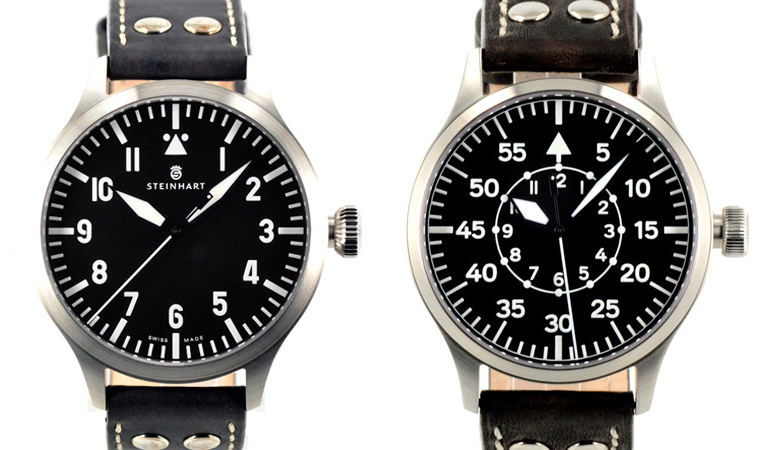
    Steinhart Nav B-Uhr A-Type dial (Left) and B-Type dial (right)

    Where as the Nav B-Uhr B-Type is a direct interpretation of the original German watches, this version of the A-type has adopted a different dial configuration to accommodate the ETA 6497 movement with it’s sub-second dial at the 9 o’clock position.

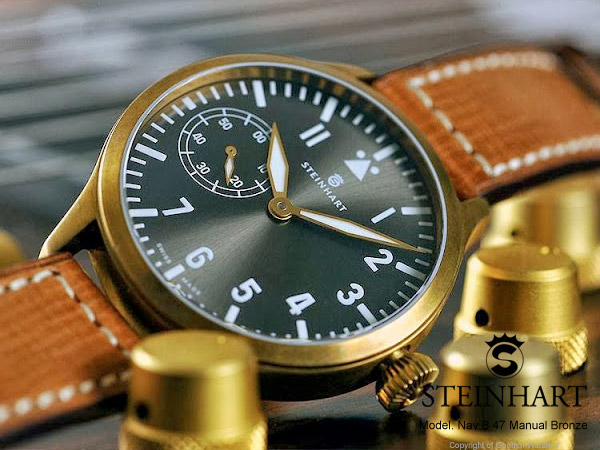
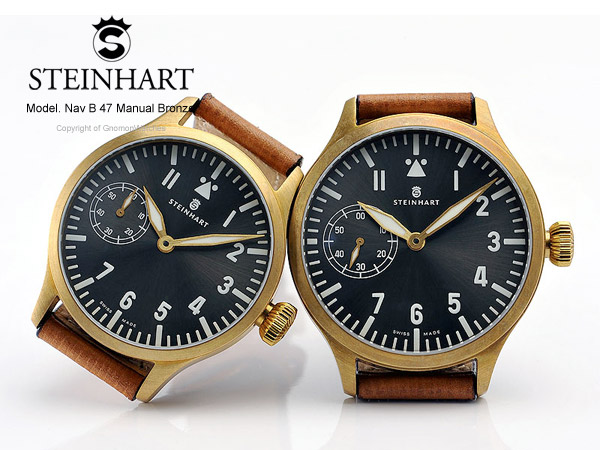
    The Nav B-Uhr A-type is available with a standard Stainless Steel case or solid bronze case with hand wound Swiss ETA 6497 movements.

    Crystal:

    The crystal is a domed sapphire with anti-reflective coating on the inside.

    Steinhart Nav B Uhr A Type Review 01
    Steinhart Nav B Uhr A Type Domed Sapphire Crystal

    Case:

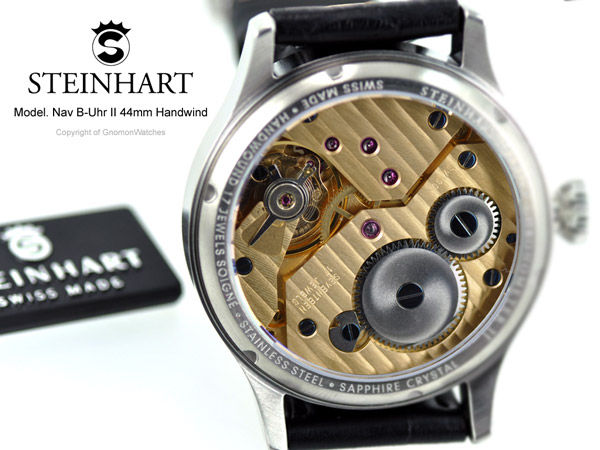
    The cases are 44mm in diameter and both materials have a display case-back standard. This is wonderful since the ETA 6497 is such a beautiful movement. I like the bronze case in particular since unlike the stainless steel it will start to develop a patina over time as the bronze oxidizes and reacts with the oils and acids in your skin. Much like an old leather chair, this case should develop a unique patina that just gets better with age.
    Steinhart Nav B Uhr A Type Review 03

    Steinhart Nav B Uhr A Type Review 05
    Steinhart Nav-B Uhr Display Caseback

    Dial/Hands:

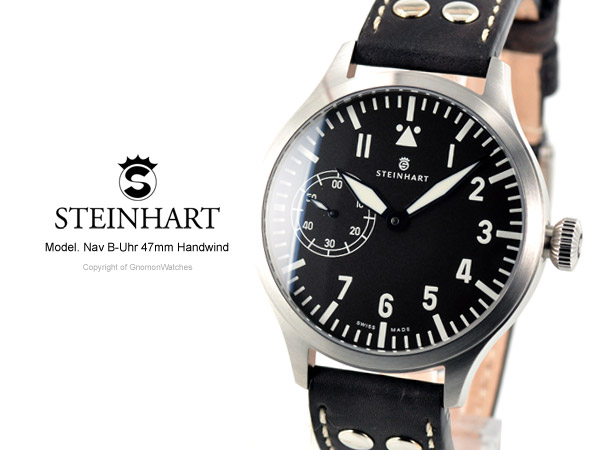
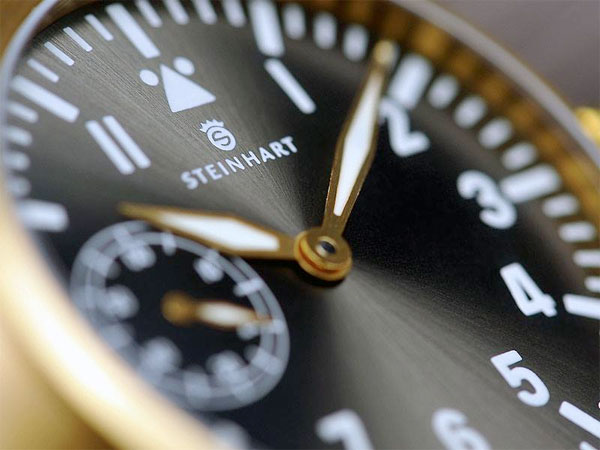
    The Dial on the Nav B-Uhr A-type is a matte black with either highly polished silver hands for the SS model, or satin bronze hands for the Bronze model. Both options have a sub-second dial at the 9 o’clock position.

    Steinhart Nav B-Uhr A Type Review 10
    Dial & Hands – Steinhart Nav B-Uhr A-type

    Lume:

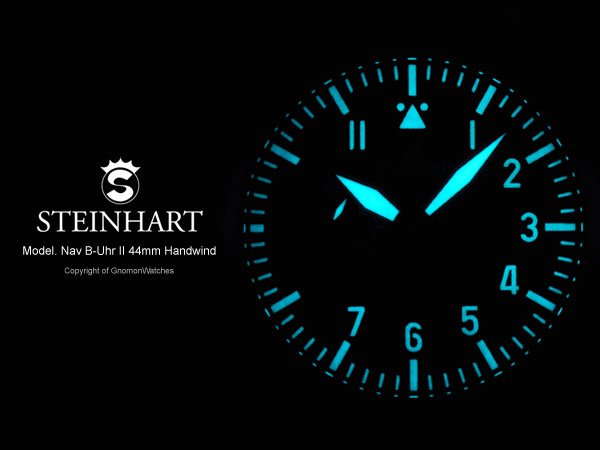
    The lume on the Nav B-Uhr A-Type is excellent. The large indices and hands are painted with plenty of Superluminova C1.

    Steinhart Nav B-Uhr A Type Review 07
    Blue Lume on the Steinhart Nav B-Uhr A-type

    Crown:

    The Nav B-Uhr A-Type uses a deeply grooved onion type crown. This design was originally made so that pilots could easily pull the crown and stop the sweeping seconds. These onion shaped crowns had to be large enough to pull and manipulate with gloved hands. Modern iterations of the Nav B-Uhr have scaled down the crown slightly, but thankfully Steinhart’s Nav B-Uhr offerings still has a crown that is big and beefy and a pleasure to pull an manipulate.
    Steinhart Nav B-Uhr A Type Review 11

    Strap:

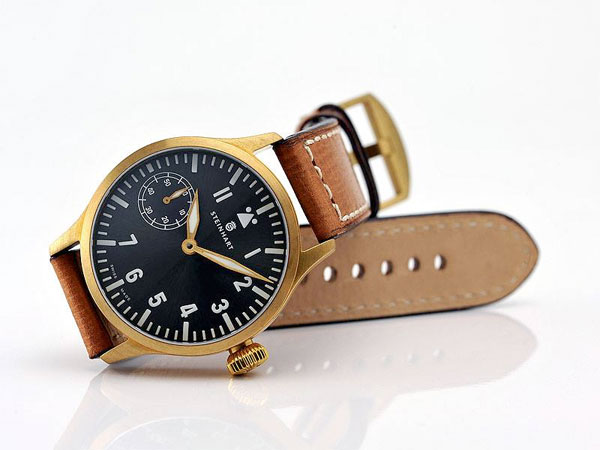
    The Straps on the Steinhart Nav B-Uhr watches again vary depending on the model you choose. Both are thick leather pilot style straps. The stainless steel option comes with a riveted black leather strap while the Bronze option comes with a sewed brown leather strap.

    Steinhart Nav B-Uhr A Type Review 09
    Brown leather strap on the Bronze Nav B-Uhr A-type

    Movement & Accuracy:

    White the B-type comes with an automatic movement and sweeping center seconds, the A-Type uses an ETA 6497 movement whis is hand wound, meaning you will have to wind it periodically. I find that I actually enjoy the process of winding my watches, so this is a characteristic I look for in a pilot watch.

    Conclusion:

    Steinhart makes amazing watches for the price. Any of their pilots are going to be an outstanding value, and the Nav B-Uhr watches are great examples of a classic Pilot watch with great craftsmanship.

    [button size=”small”]Options[/button]

    The Nav B-Uhr A-type is available with a Stainless Steel case or a Bronze Case, and has two dial/hand options; silver or bronze. It is available with a 44mm case or a 47mm case, both utilizing the hand wound ETA 6497 movement.

    [button size=”small”]Price[/button]

    $540.00 Nav-B Uhr A-type Stainless Steel From Gonom Watches
    $560.00 Nav-B Uhr A-type Bronze From Gonom Watches


    I hope you found this Steinhart Nav B-Uhr Review (A-Type) helpful! Did I leave something out? Have something to add? Let me know in the comments.


  • Steinhart Nav B-Uhr Review (B-type)

    Steinhart Nav B-Uhr Review (B-type)

    Steinhart Nav B-Uhr Review (B-Type)

    Steinhart is a german watch manufacturer founded in the 1990’s by Guenter Steinhart. With a degrees in Architecture and Mechanical Engineering, Guenter decided to turn his love of watches into a business with the intention of producing high quality Swiss watches at an affordable price point. While Steinhart does produce many different styles of watches, today we will only be looking at their Pilot line, and more specifically the Nav B-Uhr.

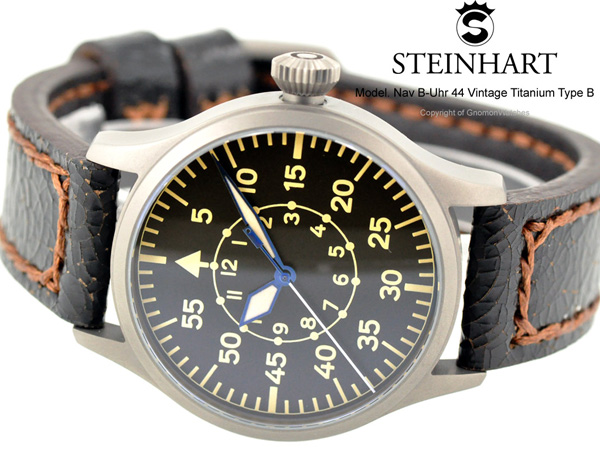
    The Steinhart Nav B-Uhr B-type takes it’s design queues directly from the historically accurate German Luftwaffe watches. Designed by the Reichs-Luftfahrtministerium and manufactured during WW2 by German companies such as A. Lange & Shone, IWC, Laco, Stowa & Wempe for the German Airforce, it’s hard to forget that these watches have a history that can be difficult to reconcile. B-Uhr or B-Urhen is an abbreviation for Beobachtungs-uhren, which translates literally to Observation Watch, hinting at the original purpose of the watches. Not to be confused with the A-Type dial which was issued to pilots, the B-Type was used for navigation, observation and reconnaissance, as well as targeting operations in multi crew German bombers. This watch has a design is as historically rich as any watch out there. Regardless of it’s origins, the aesthetics of the Nav B-Uhr have outlived its usefulness in the cockpit, and what we are left with is an interesting and attractive timepiece.

    Steinhart Nav B-Uhr Review
    Steinhart Nav B-Uhr A-Type dial (Left) and B-Type dial (right)

    The Nav B-Uhr B-type is available with standard or “Antique” dials, and has a variety of case options at various price points including Stainless Steel and Titanium.

    Crystal:

    The crystal is a domed sapphire with anti-reflective coating on the inside.
    Steinhart Nav B-Uhr Review 03

    Case:

    The cases on both style options are milled from a single piece of steel/titanium and have a brushed patina applied. At 44mm in diameter the cases are large, but that is expected with a pilot watch. The casebacks are that of a screw down variety and are engraved with the watch’s specs as well as a pilot’s face.

    Dial/Hands:

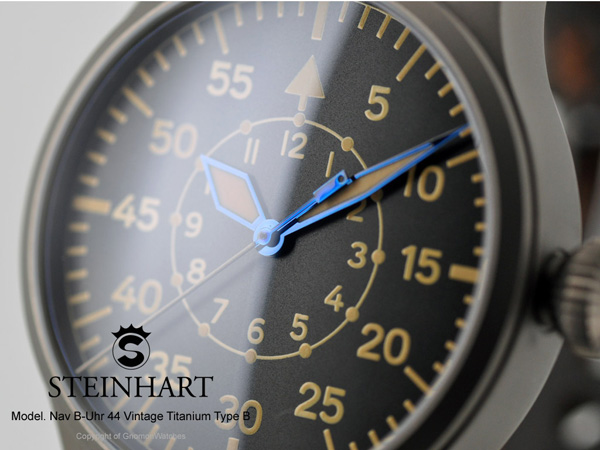
    As mentioned before, the dial and hands are available in a standard Black/White configuration or an “Antique” color variation, which is meant to imitate the fading and yellowing that is present when radium doped paints age. Unfortunately, the “Antique” variation ends up just looking like a dull yellow to me. I much prefer the black and white, even if it is a little bit plain in appearance.

    Lume:

    The lume on the Nav B-Uhr B-Type is excellent. The large indices and hands are painted with plenty of Superluminova C1.

    steinhart_nav_b_uhr_review_02

    Crown:

    The Nav B-Uhr B-Type has two different styles of crowns depending on the model. The crown on the standard model is more squared and has a Steinhart “S” on the end. The “Antique” version has a more traditional onion shaped crown with deep v-shaped cuts. Both options have large and prominent crowns as all pilot watches should. Originally designed so that pilots could easily pull the crown and stop the sweeping seconds, the typically onion shaped crowns had to be large enough to pull and manipulate with gloved hands. Modern iterations of the Nav B-Uhr have scaled down the crown slightly, but thankfully Steinhart’s Nav B-Uhr offerings still has a crown that is big and beefy and a pleasure to pull an manipulate. I would give the nod to the “Antique” style crown if I had to choose.

    Steinhart Nav B-Uhr Review 04
    Steinhart Nav B Uhr Review 08

    Strap:

    The Strap on the Steinhart Nav B-Uhr watches again vary depending on the model you choose. Both are thick leather pilot style straps. The Standard option comes with a riveted black leather strap and the “Vintage” option comes with a sewed antiqued brown leather.

    Movement & Accuracy:

    Both options come with an ETA 2824 movement under the hood. While this is a solid and dependable movement, it is also automatic which is a diversion from the traditional hand-wound pocket watch movements these watches originally used. While Steinhart does offer hand wound pilot watches, this dial configuration with the sweeping seconds hand means you’ll have to settle for an automatic here.

    Conclusion:

    Steinhart makes amazing watches for the price. Any of their pilots are going to be an outstanding value, and the Nav B-Uhr watches are great examples of a classic Pilot watch with great craftsmanship.

    [button size=”small”]Options[/button]

    The Nav B-Uhr is available with a Stainless Steel case or a Titanium Case, and has two dial/hand options; black/white or antique.

    [button size=”small”]Price[/button]

    $480.00 Nav B-Uhr Standard SS From Gonom Watches
    $560.00 Nav B-Uhr Antique Titanium From Gonom Watches


    I hope you found this Steinhart Nav B-Uhr Review (B-Type) helpful! Did I leave something out? Have something to add? Let me know in the comments.


  • How to break in a NATO strap

    How to break in a NATO strap

    How to break in a NATO strap

    Is your brand new NATO strap a little too stiff? Well don’t worry, just like leather straps, and leather anything for that matter, NATO straps take a little while to break in and become molded to your wrist. Luckily, there is a quick way to speed up this break-in process and it’s as simple as doing a load of laundry.

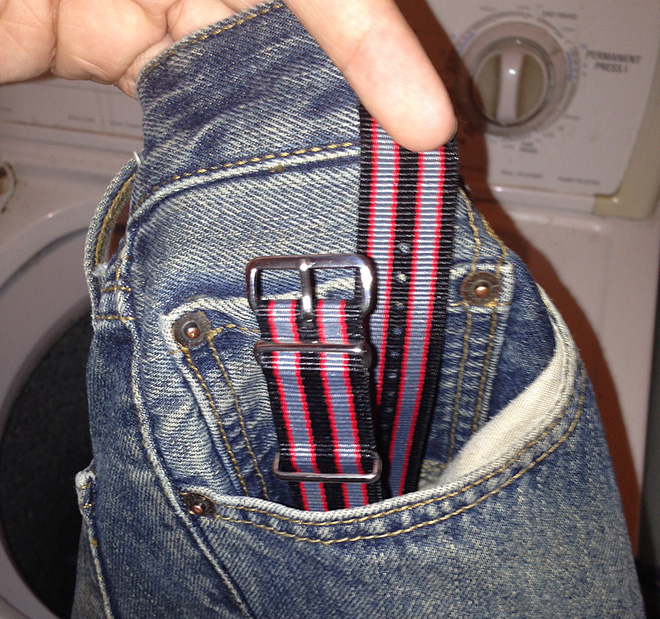
    I just received this new 22mm NATO strap from Crown & Buckle, but like all new NATO’s it was a bit stiff. how to break in a nato strap - BLACK/RED/GREY NATO - 22MM

    So whats the trick? Simply drop your new strap into the pocket of a pair of pants when they’re going into the washing machine.

    how to break in a nato strap - put the nato strap in the washing machine

    Once the wash is done check to make sure the strap is still in your pants pocket and add a fabric softener sheet before tossing them into the dryer. Chances are the strap will fall out of the pocket while it’s bouncing around in there, so add a balled up sock to the pocket to keep the NATO in place.

    how to break in a nato strap - put the nato strap in the dryer

    Once the laundry is done your strap should be nice and soft, and should smell like fresh laundry to boot!

  • How to build your own mechanical watch

    How to build your own mechanical watch

    How to build your own mechanical watch

    Have you ever wanted to build your own watch? Something unique and specific to your tastes? Maybe you’ve seen watches that had a great dial and case, but the hands weren’t quite right? Well, with a little research on the internet, some mechanical know-how and a fair bit of patience, you can build your very own bespoke watch. For this watch, I wanted to try a B-Uhr style Flieger and the end result was better than I could have imagined. These are the steps I took to make it happen.

    Step 1: Finding the Parts

    The first step to building your custom Flieger is sourcing the parts. You’ll need to find the following:

    A MOVEMENT

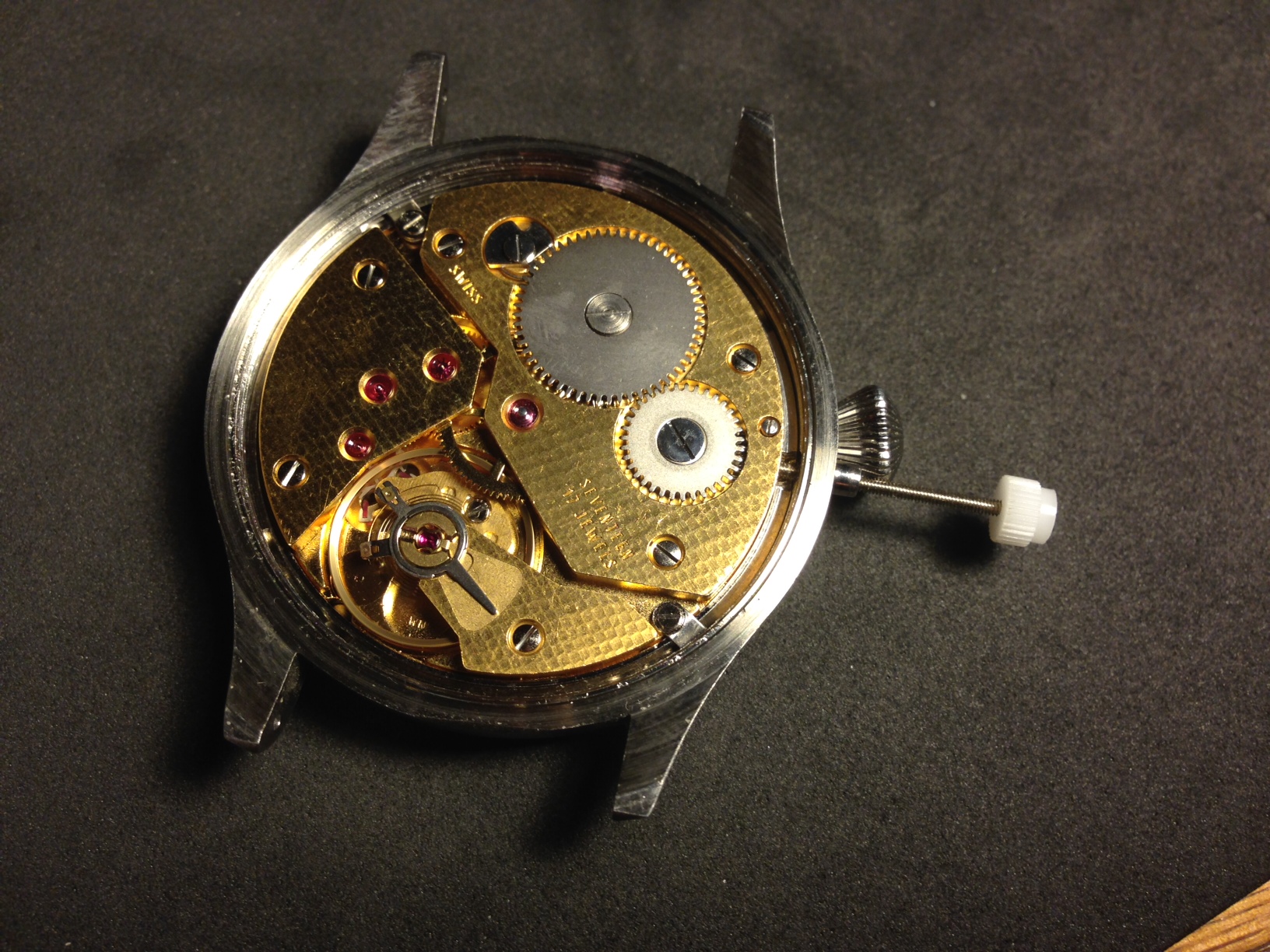
    How to build your own mechanical watch - ETA 6497 MovementYou’ll want to figure out the movement first since this will determine the layout of the dial and the second hand position. The movement I used for my watch is an ETA 6497, which has its second hand located at the 9 o’clock position. If you would rather have your second hand at the 6 o’clock position you can get the ETA 6498 instead.

    ETA movements are getting harder to find these days since ETA has decided to stop supplying their movements to third parties. Despite the shortage, you can still buy them through Otto Frei and sometimes find them on eBay. The price depends on the level of decoration you want. I ordered the gold-toned movement with a hammered finish for $169.00.

    A CASE

    How to build your own mechanical watch - Flieger Style CaseFor the case, it needs to be compatible with the ETA 6497/6498 movement. I went with a Solid Steel B-Uhr style case from HelenaRou. This case is available with mineral crystal glass for $49.95 or sapphire for an additional $40.00.
    DIAL & HANDS

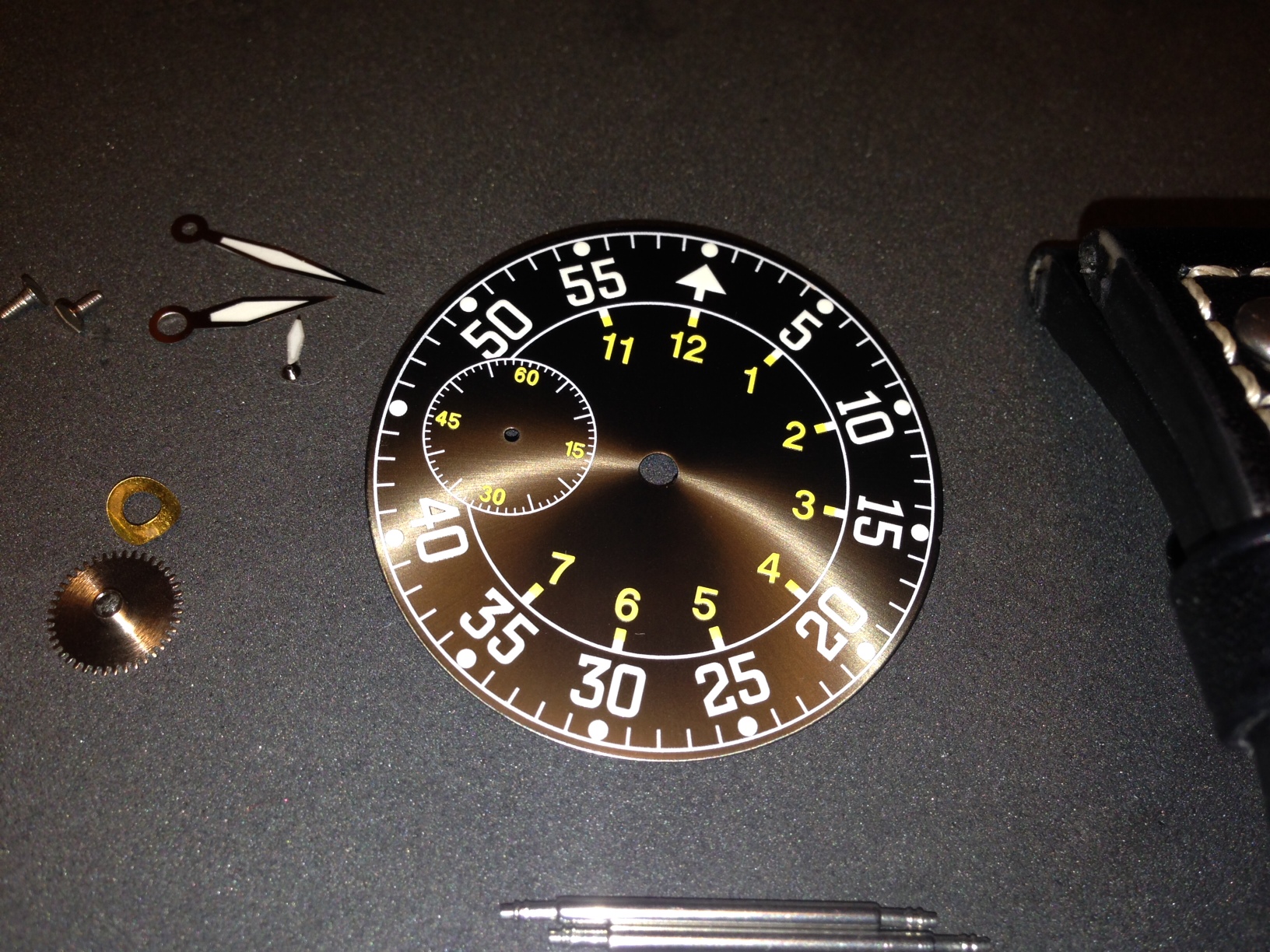
    How to build your own mechanical watch - Dial & HandsSince I was already getting my case from HelenaRou, I decided to get my dial and hands there as well. I went with the Black Sunray Dial ($24.95) and Silver Anodized superlume hands ($15.50).


    STRAP

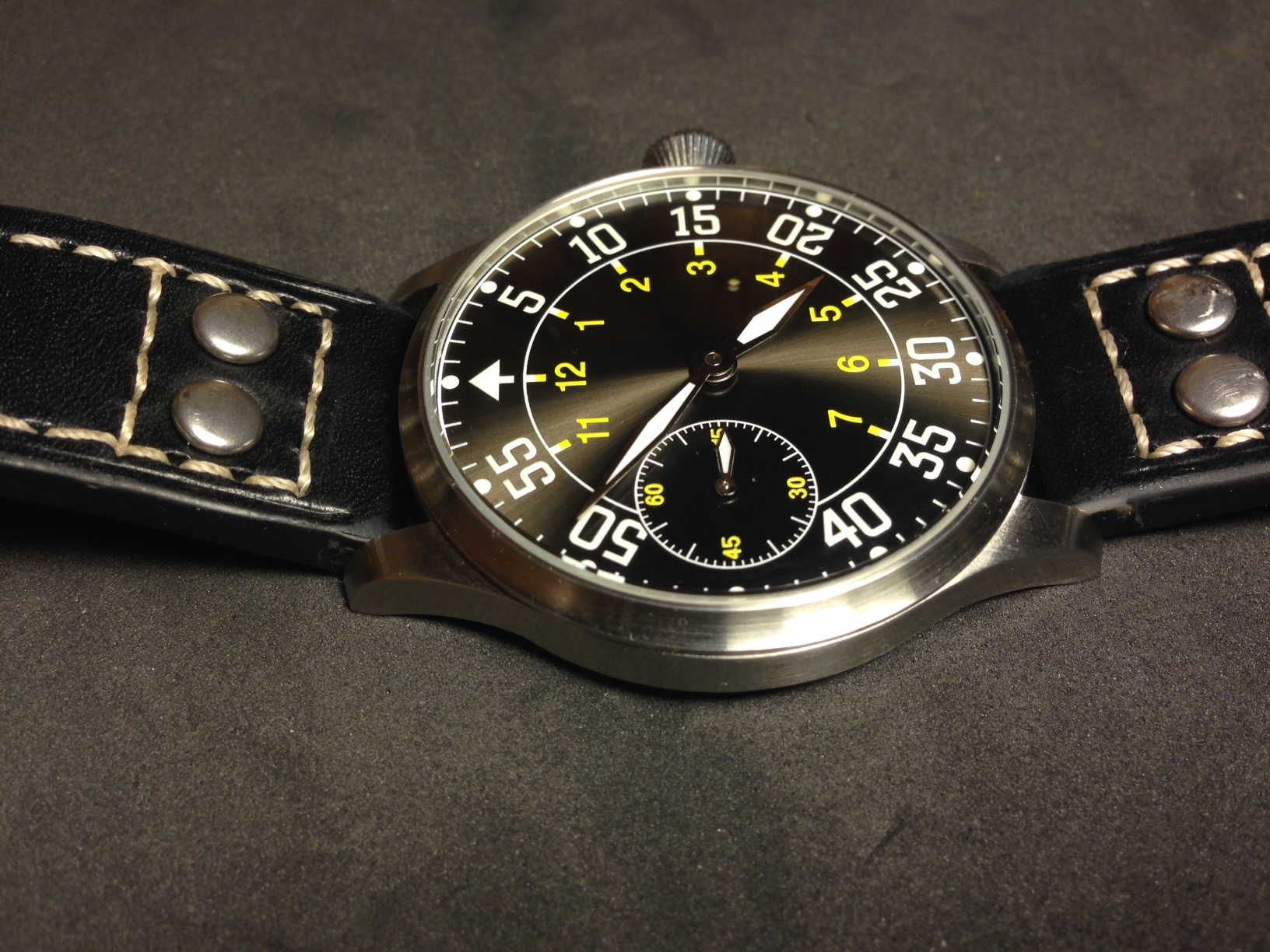
    How to build your own mechanical watch - Leather Strap For the strap, I went with the 22mm Black Calf Flieger Strap from Crown & Buckle. I paid $30.00 for mine, but it's currently on sale for $17.50. That's an amazing price for a calfskin leather strap.

    MISCELLANEOUS

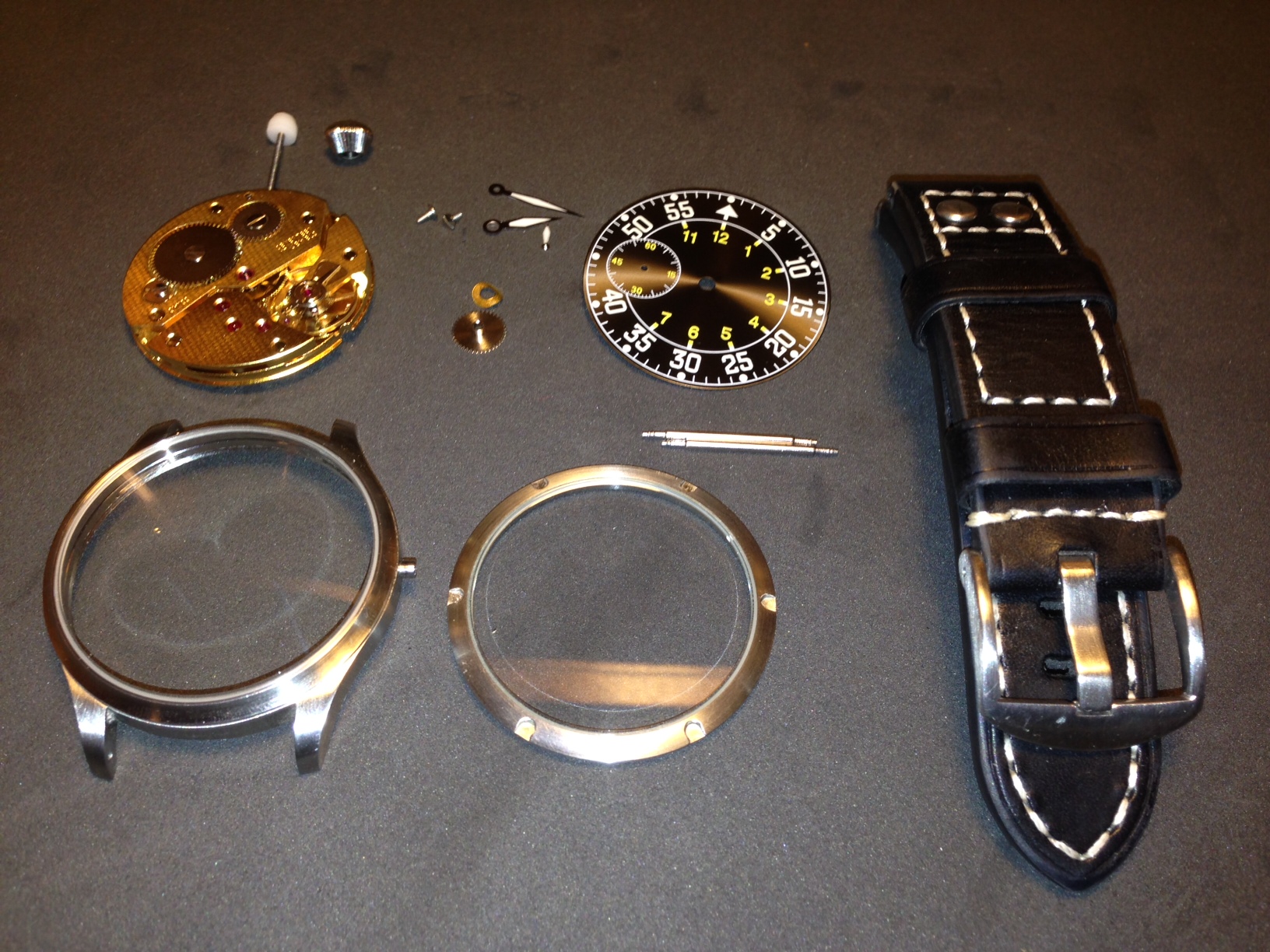
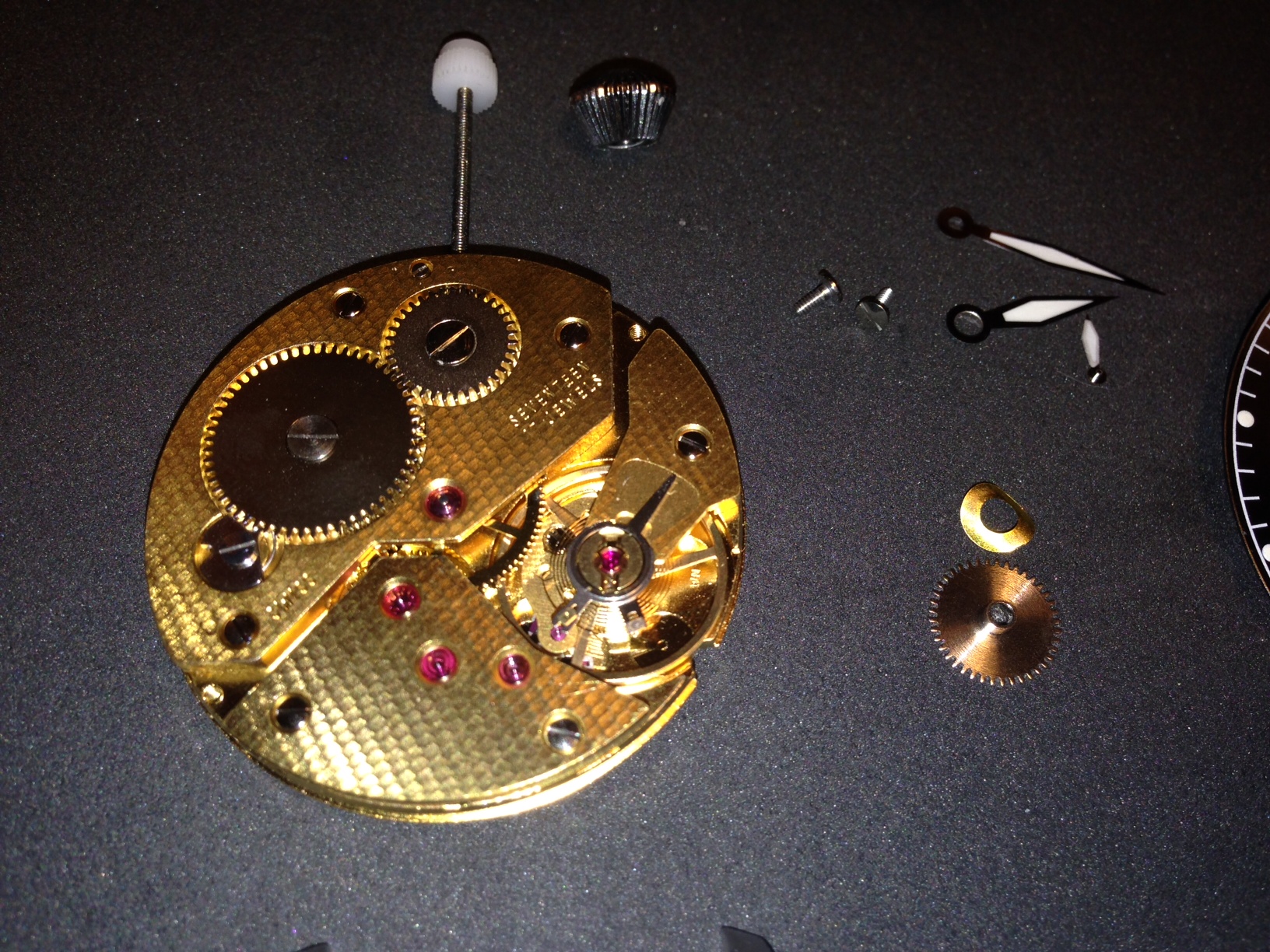
    You'll also need 22mm spring bars and Mounting Tabs for the movement. Once all of my parts were in, I laid everything out to inspect for damages or imperfections. I should probably mention at this point that I built this watch about a year ago and have been wearing it quite frequently since. I took it apart  for the purpose of this tutorial, so any scratches or scuffs you may notice on the case or strap are the result of lots of use. Your parts should be in pristine condition when you receive them. How to build your own mechanical watch - Flieger-01 How to build your own mechanical watch - Flieger-05

    Step 2: Removing the stem from the movement

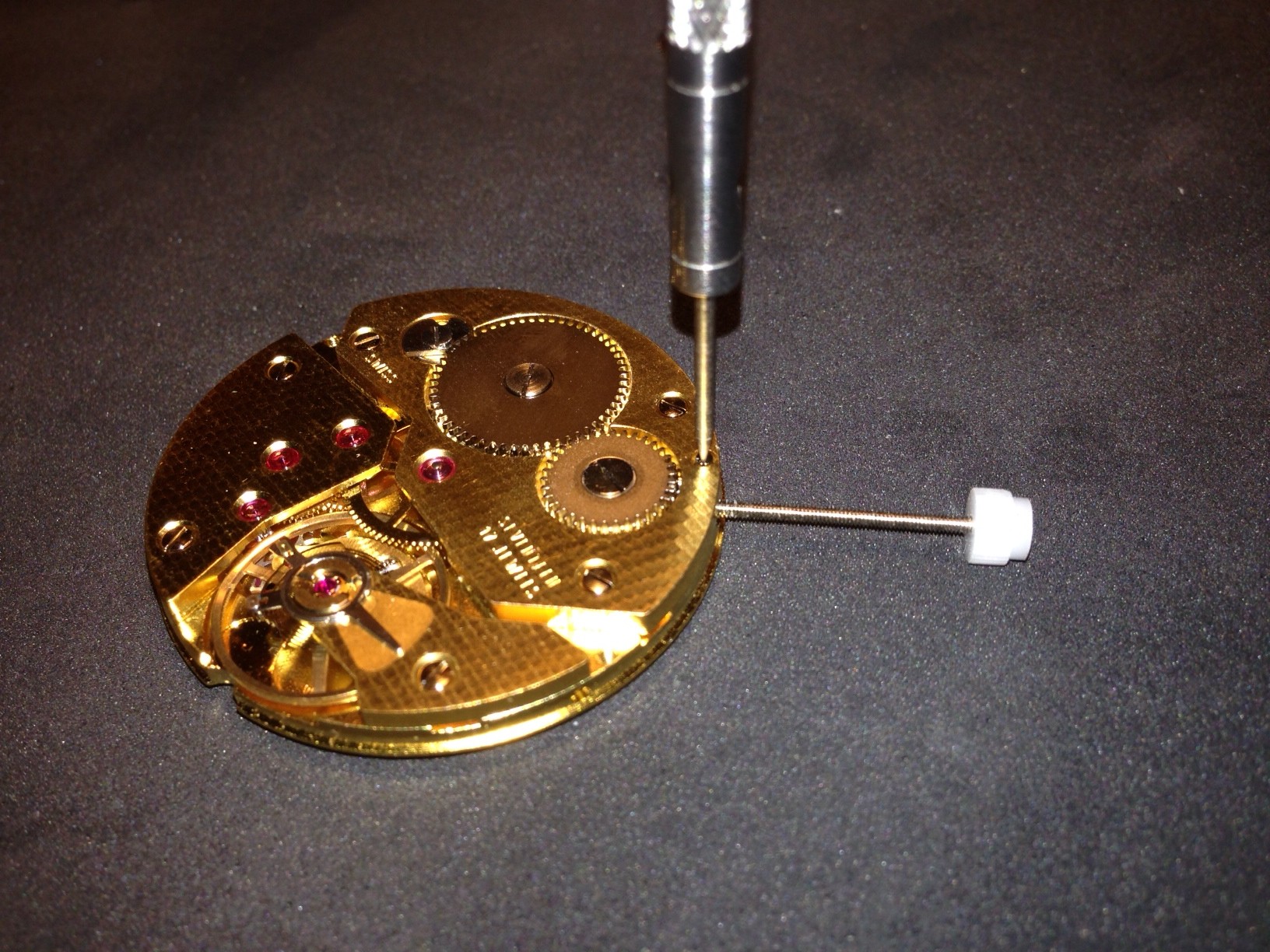
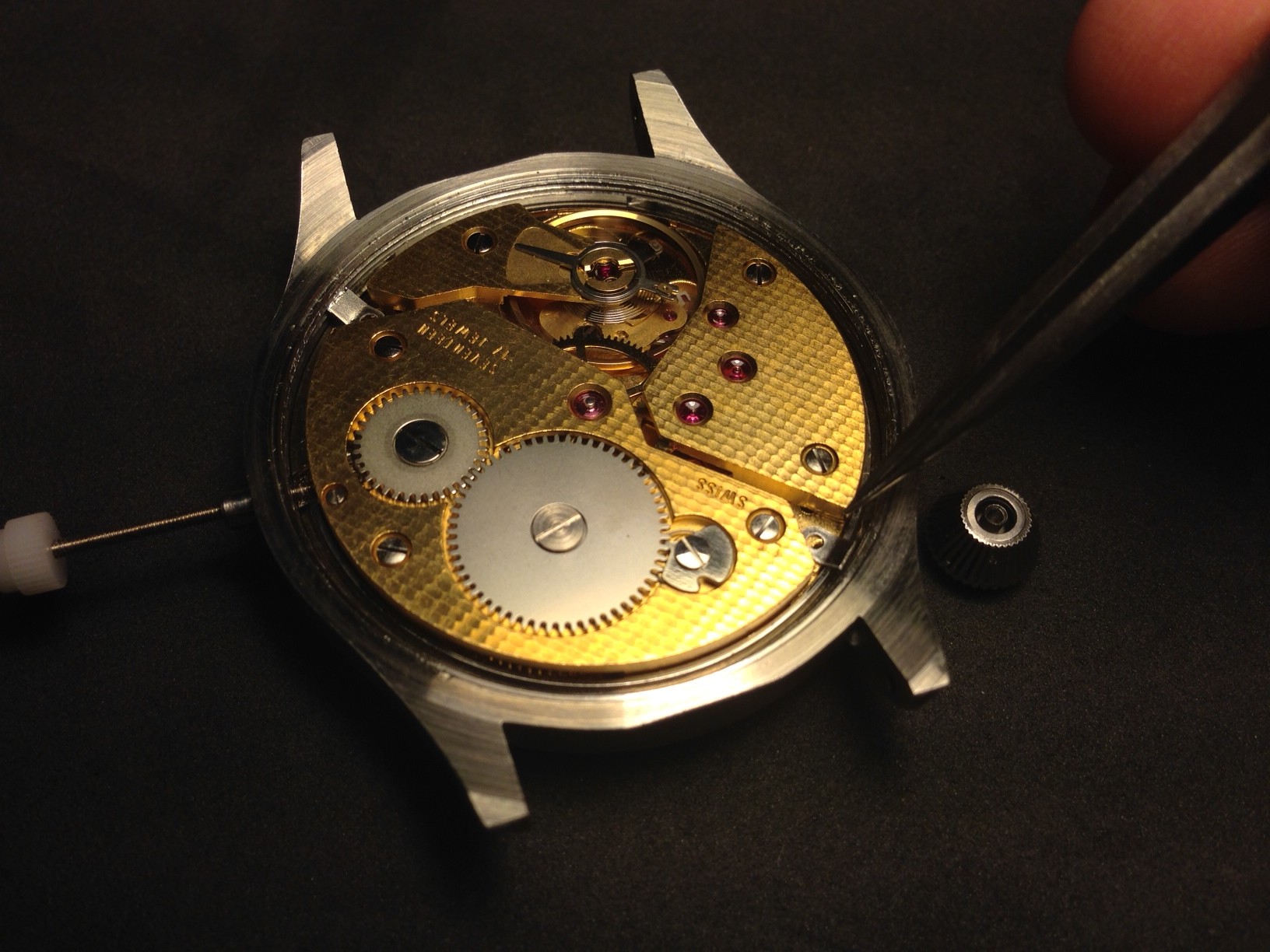
    First, remove the stem from the movement. ETA uses a set screw to hold the stem in, so to remove it, you'll need to rotate the set screw approximately 180 degrees. Don't completely unscrew it, just turn it slightly and pull on the stem. If it doesn't pop out, turn the screw another quarter turn and try again. How to build your own mechanical watch - Remove the stem from the movement

    Step 3: Installing the hour wheel and dial washer

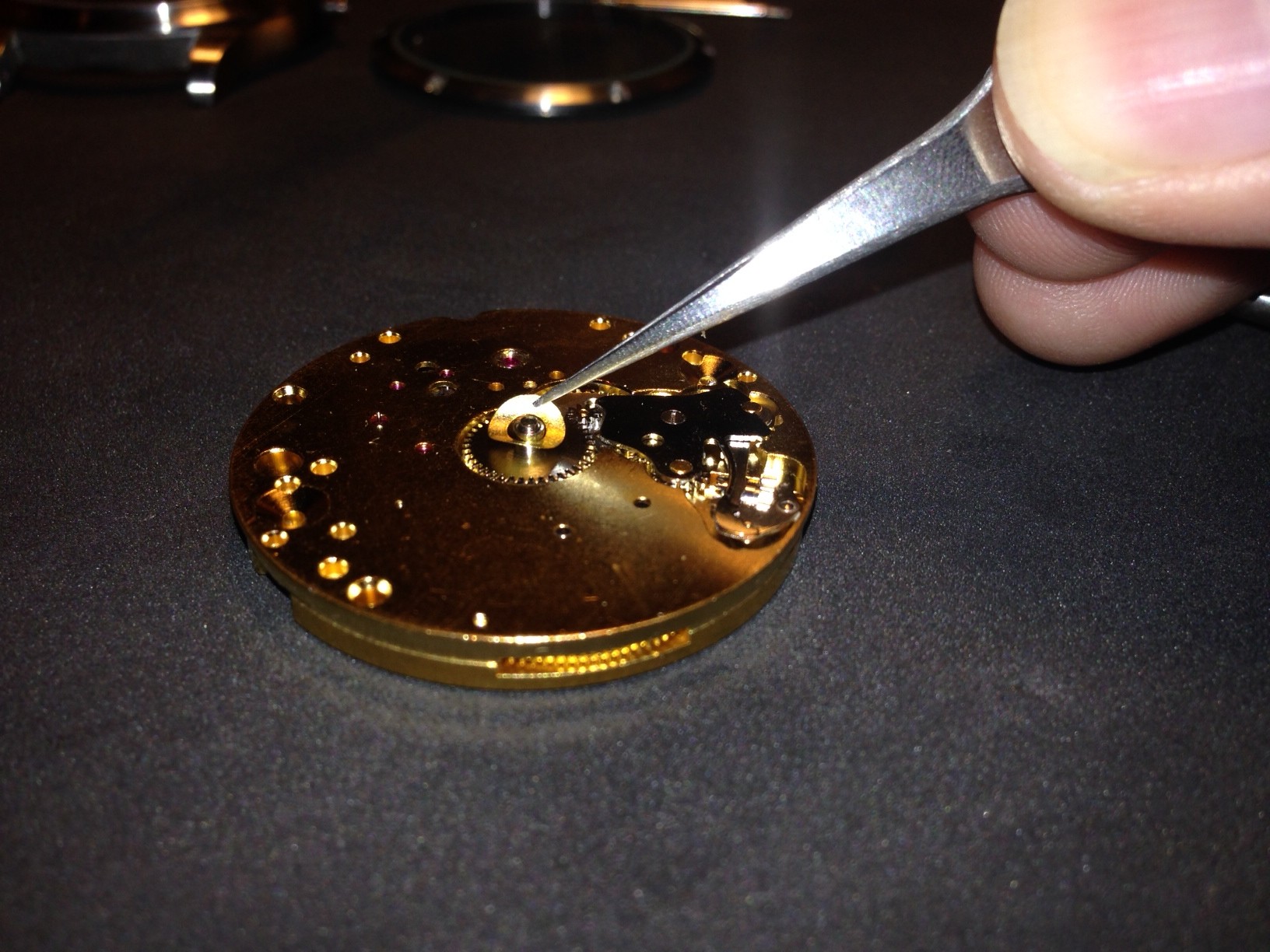
    How to build your own mechanical watch - Install the hour wheel and dial washer Once the stem is out, you can put the hour wheel and dial washer in place. Simply drop the hour wheel over the canon pinion and make sure the gears on the outside engage with the gears of the minute wheel. How to build your own mechanical watch - How to build your own mechanical watch - Install the hour wheel and dial washer 2 Once the hour wheel is in place, put the dial washer on top of it. When the dial is installed, it will press against the washer and keep the hour wheel in place.

    Step 4: Installing the dial

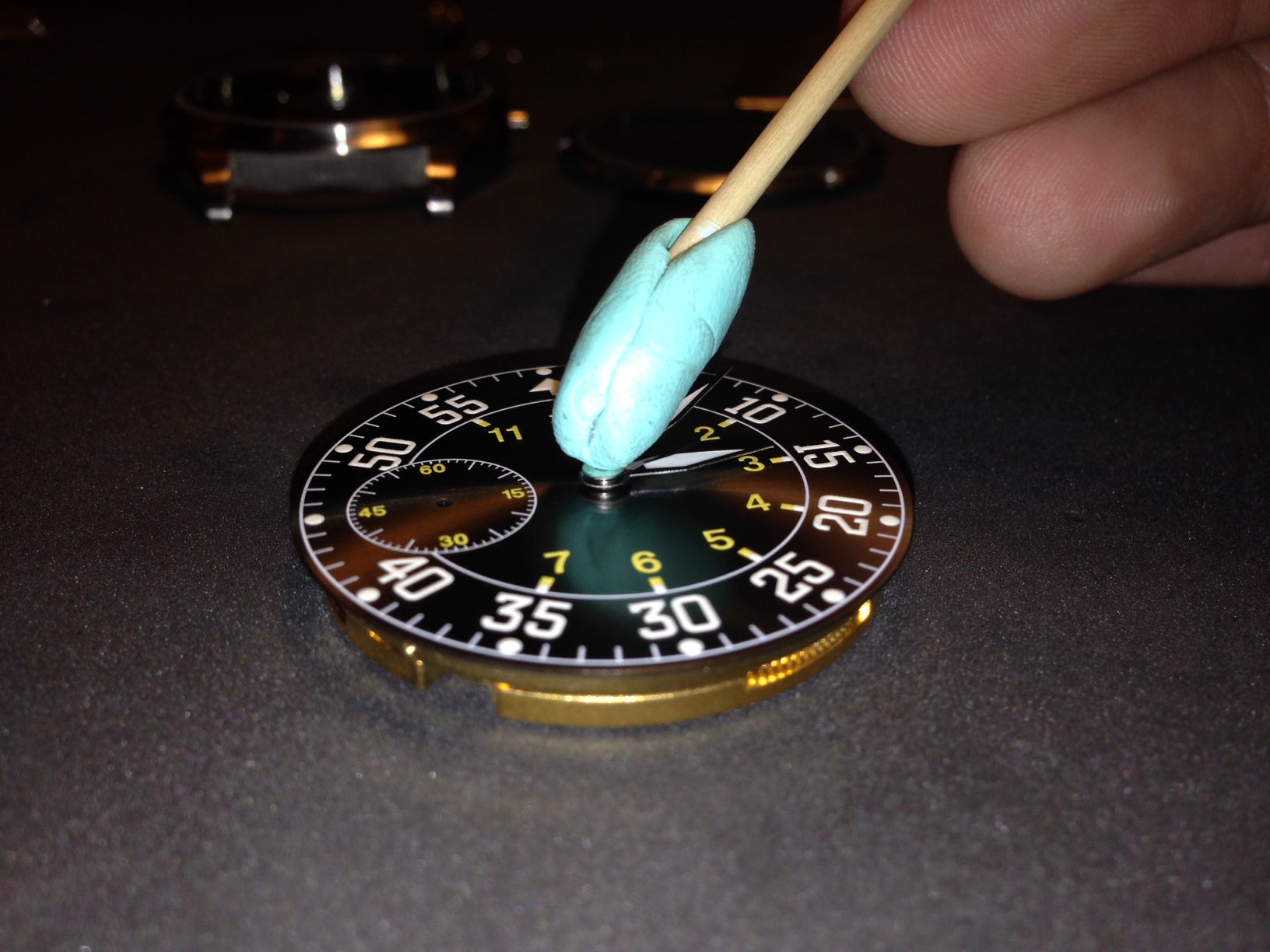
    Next, loosen the set screws that hold the dial feet in place. These will be tightened down when you receive the movement, so give them a few counter-clockwise turns to clear the space that the dial feet will sit in. How to build your own mechanical watch - How to build your own mechanical watch - Install the hour wheel and dial washer 2 Now we're ready to put the dial in place. Avoid scratching the dial or getting fingerprints on it. I used a stick with some Rodico cleaning putty on the end to put it in place. If you like, you can just grip it from the sides. Once the dial is in position and sitting flush with the movement, tighten the set screws you just loosened. This should hold the dial firmly in place. How to build your own mechanical watch - Install the dial

    Step 5: Attaching the hands

    Now it's time to set the hands. Starting with the hour hand, drop it into place and use something to press it over the shaft of the hour wheel. Once in place, check it from the sides to make sure it is parallel with the surface of the dial. How to build your own mechanical watch - Attach the hour hand How to build your own mechanical watch - attach the minute hand Next is the minute hand. I used Rodico cleaning putty on a stick to put the minute hand in place before pressing it down onto the canon pinon. Again, verify that the hands are parallel with the dial and each other. How to build your own mechanical watch - attach the minute hand The last and most difficult hand is the second hand. The pinion for the second hand is extremely small. So small you won't likely be able to see it without magnification, so if you have a loupe or magnifying glass, now is the time to use it. The pinion is also fragile, so it's best to get the second hand in position. Then, verify that it's on the pinion and not next to it before pressing down. How to build your own mechanical watch - attach the second hand How to build your own mechanical watch - the second hand How to build your own mechanical watch - second hand pinion

    Step 6: Casing the movement

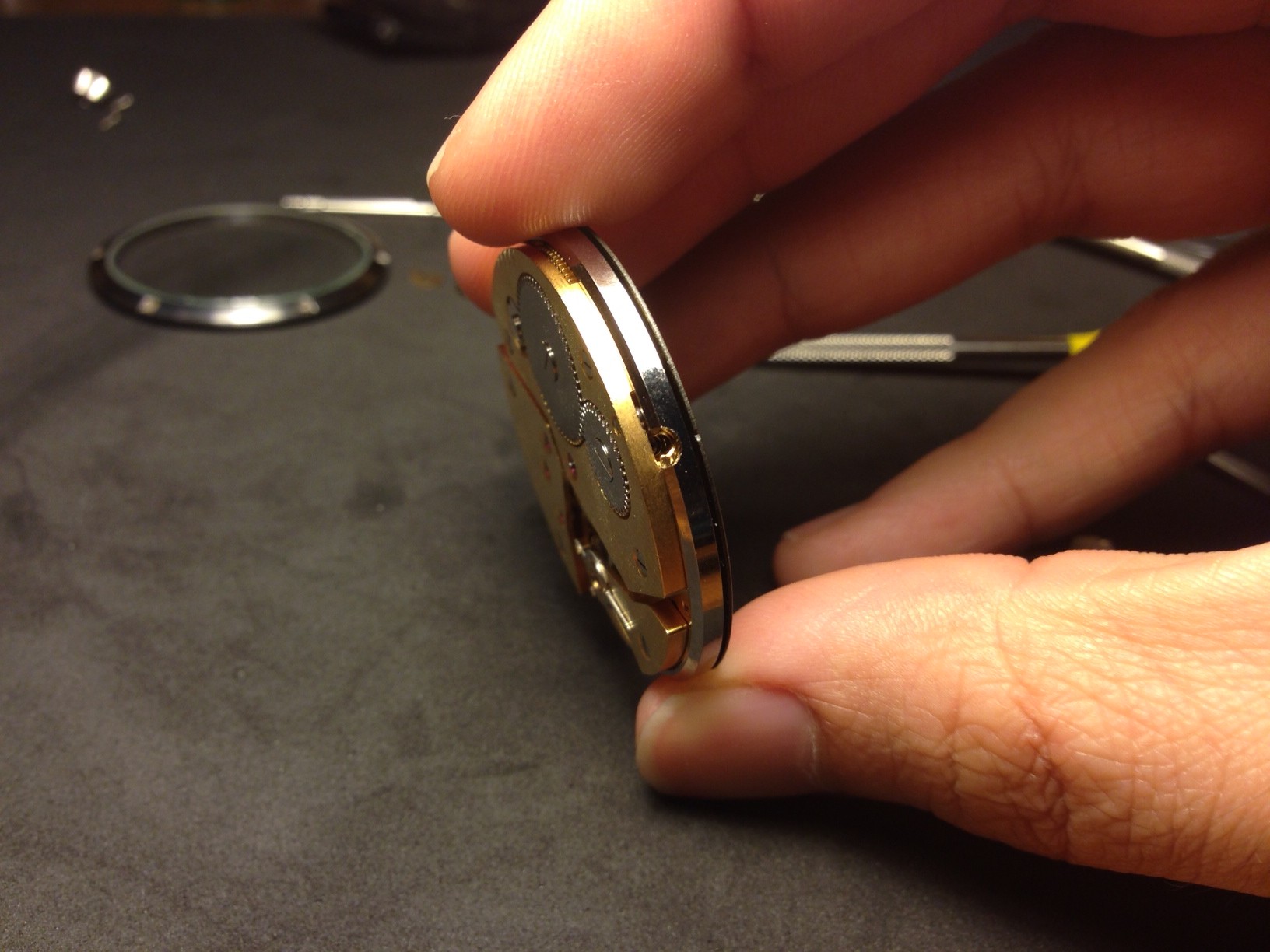
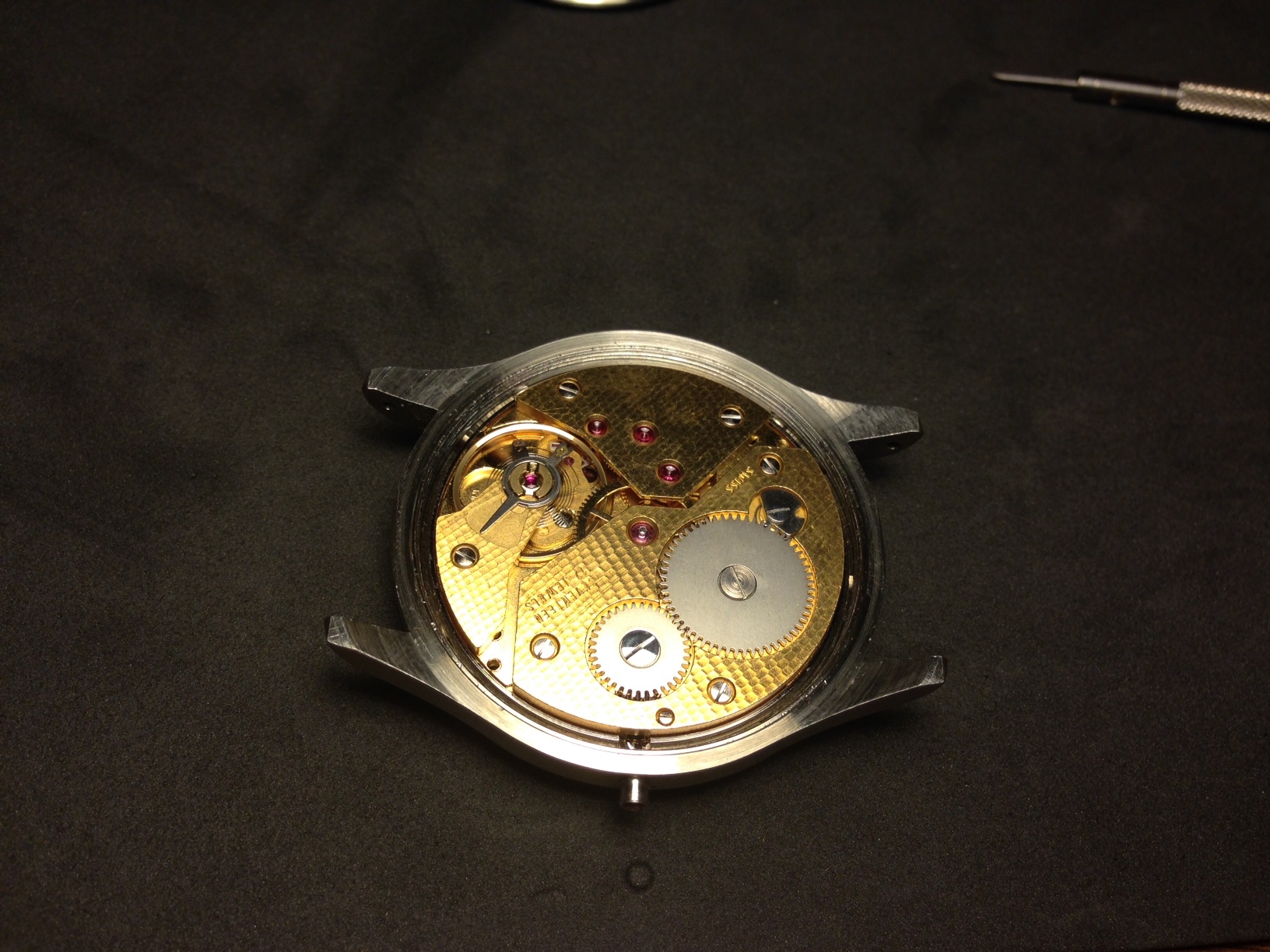
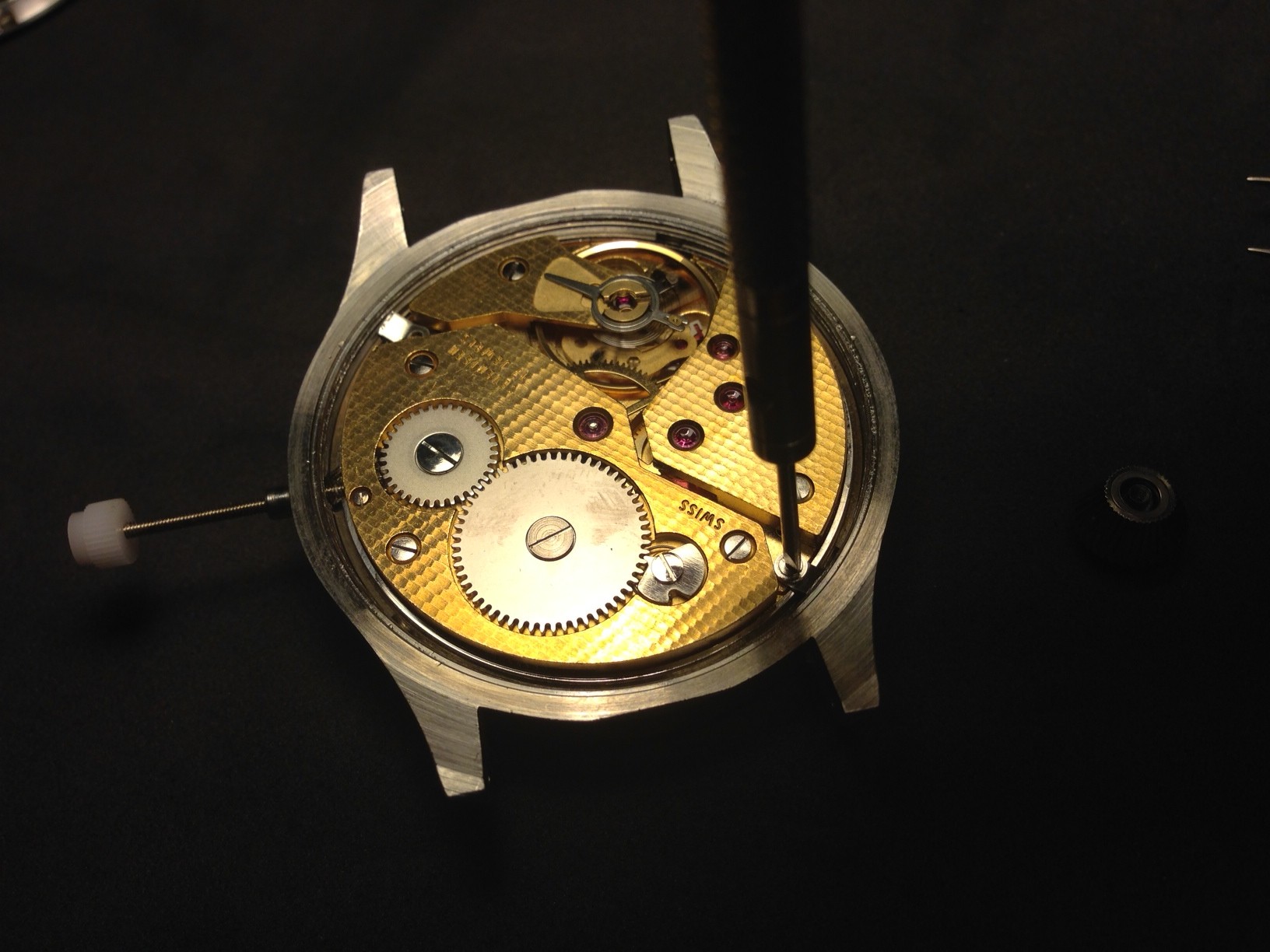
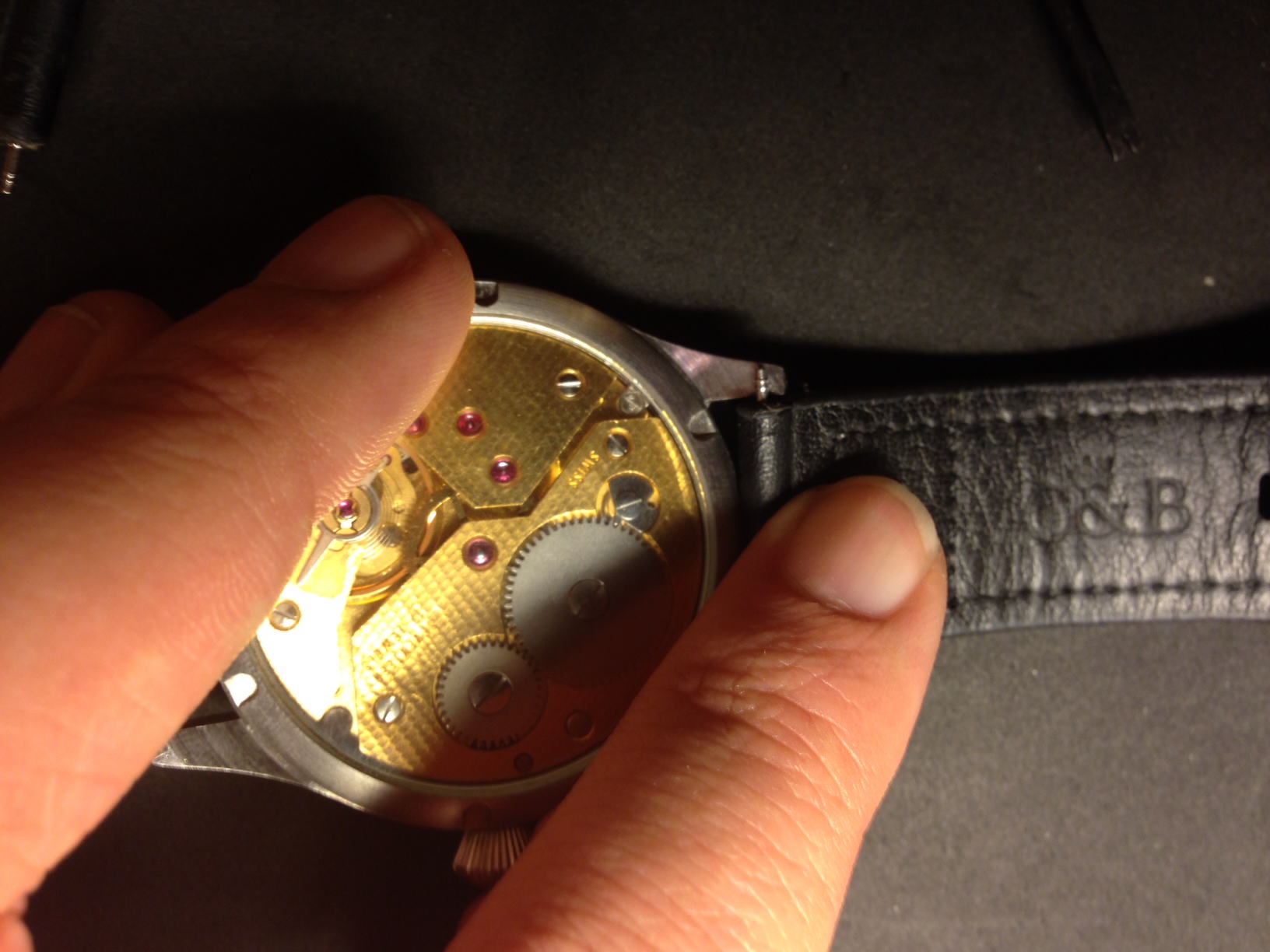
    Once the dial and hands are firmly in place, add the movement adapter. Slip it around the movement, making sure to align the hole in the adapter with the stem hole in the movement. The bevel should face away from the dial. How to build your own mechanical watch - install the movement adaptor We're almost ready to put the watch in the case, so set the movement aside (dial side up) and start to clean the inside of the case with a microfiber cloth. Make sure there are no fingerprints or dust specks inside the case. Once it's sealed up, you want it to stay that way, so take your time to make sure everything is clean. How to build your own mechanical watch - clean the inside of the case Once the case is clean, drop the movement in. Once again, make sure the watch stem is lined up and in the appropriate place. How to build your own mechanical watch - Install the movement Once the movement is in place, I like to put the stem in to keep it from shifting around while I screw the movement holder tabs in place. Please note that the tab is upside down in this photo. You want it to slope downward and follow the contour of the adapter ring before you screw it in place. How to build your own mechanical watch - attach the stem How to build your own mechanical watch - line up the stem

    Step 7: Cutting the stem

    Once the movement tabs are in place, it's time to measure the stem and cut it down to fit your crown. I usually just eyeball this part. If you put the crown next to the stem, you can get an idea of how much length you'll need to cut off. If you like, you can mark the stem with a black marker so you know where to cut. How to build your own mechanical watch - line up the stem How to build your own mechanical watch - cut the stem Once the extra length of the stem is cut off, screw the crown on. If the cut wasn't clean, you may have to file the end of the stem before the crown screws on. I like to add a little bit of Loctite glue to the stem so the crown doesn't come off in the future. How to build your own mechanical watch - attach the crown Once the crown is screwed in place and you are happy with the length of the stem, secure it by tightening the locking screw. Once the screw is tightened, check to make sure you can pull the crown and set the time properly.

    Step 8: Attaching the case-back and straps

    How to build your own mechanical watch - attaching the case back Next, screw on the case-back and attach the watch straps. I found that my JAXA wrench couldn't open wide enough to fit this case-back so I had to use a friction ball case openerHow to build your own mechanical watch - friction ball case opener instead. Once the case-back is securely tightened, attach the straps. How to build your own mechanical watch - attach the straps Use your spring bar tool to attach the strap with the buckle to the top (12 o'clock) position. Then attach the second strap and you're done! How to build your own mechanical watch - Flieger watch Congratulations! You are now the proud owner of a high quality bespoke Flieger-style watch for a fraction of what you would pay retail. I tallied my costs and this build came out to roughly $300.00. Not bad considering the closest Flieger-style watch with an ETA 6498/97 movement was the Stowa Klassic which starts at $1200.00. Sure, Stowa has a rich history, but that isn't worth another $900.00 to me. How to build your own mechanical watch - Flieger watch 2 How to build your own mechanical watch - Flieger watch 3 How to build your own mechanical watch - Flieger watch 4 How to build your own mechanical watch - Flieger watch 5